
Who Counts as 'Western'?
Migration, Majority Fears, and the Transformation of Values.

by Dr. Isaiah (Ike) Wilson III
I. Shadowland
On a crisp spring evening in a Midwestern suburb, a packed church basement hummed with unease. A local pastor, white and in his fifties, addressed a crowd of twenty-by-fifteen folding chairs.
“They say I’m being paranoid,” he told the room, “but this isn’t my town anymore.”
Maps of changing school demographics and agriculture patrols dotted the walls.
People nodded, voices rising. Something was slipping away—something they couldn’t name.
Yes, they said, Western Civilization is under siege. It’s about heritage, they claimed: churches, daughters in school plays, backyard barbecues.
But beneath that language rattled something deeper—fear of disappearance.
II. What Are Western Values, Anyway?
When commentators rally behind “Western Civilization,” they evoke a shared cultural legacy: democracies founded on Enlightenment ideals, Judeo-Christian ethics, secular rule of law.
But what is really being defended?
Today, “Western” often signifies civic pluralism, rights, and freedoms—but also, in reactionary moments, marks those seen as outsiders.
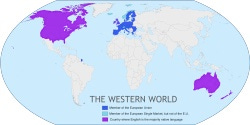
The term’s elasticity allows its deployment as both aspirational creed and tribal banner.
And as migration and demographic change accelerate, that elasticity is being exploited—and weaponized.
Western Civilization, Reclaimed: Between Civic Pluralism and Cultural Nationalism
It is often said—sometimes with reverence, sometimes with resentment—that “Western Civilization is under siege.”
Politicians invoke it as a cultural inheritance, think tanks use it as a rallying cry, and media pundits warn that migration and multiculturalism threaten to undo it.
But before we argue over what is being preserved or lost, we must ask: What exactly is Western Civilization?
And more importantly, … whose version are we defending?
Historically, the term Western Civilization refers not to a singular ethnic lineage, but to a complex tapestry of ideas, institutions, and philosophical traditions.
Its roots span from Athenian democracy and Roman republicanism to the Judeo-Christian ethic, the Enlightenment, and the revolutionary ferment of liberal democracy, individual rights, and constitutionalism.
At its pluralist core, the Western tradition is defined not by race, but by ideals: reason, civic liberty, pluralism, justice, human dignity, and the separation of powers.
It is as much about critique as it is about continuity—an evolving conversation between voices from Europe, Africa, the Middle East, and the Americas.
It is animated by Socrates' dissent, Frederick Douglass's oratory, Mary Wollstonecraft’s feminism, and W.E.B. Du Bois’s dual consciousness.
It is, at its best, a project of inclusion—one that refines itself through self-critique and moral striving.
Contrast this with the way "Western Civilization" is invoked in many nationalist discourses today.
Here, the term is stripped of its intellectual complexity and reconstituted as a racial or cultural shield. “Western” becomes code for white, Christian, and nativist.
The pluralist dynamism of Western heritage is flattened into a nostalgic myth—a “golden age” of order, homogeneity, and dominance to be restored, not a civic ideal to be expanded.
This reinterpretation not only distorts history—it turns cultural memory into political weaponry.
It reframes Western values not as universal aspirations but as territorial birthrights. Democracy becomes majoritarianism. Liberty becomes exclusion. Sovereignty becomes purity.
And dissent? That becomes treason.
We are thus confronted with a civilizational sleight of hand: a once-open conversation is narrowing into a fixed identity.
What was plural becomes parochial. What was meant to evolve becomes calcified in fear.
To engage honestly with today’s cultural debates, we must not surrender the language of “Western Civilization” to its loudest defenders.
We must reclaim it.
Not as a badge of supremacy, but as a promise of civic depth. A tradition that, when understood rightly, demands inclusion, not exclusion.
That is not threatened by diversity but enriched by it.
In this light, the demographic transformations of the 21st century are not signs of civilizational decline. They are the next chapter in a centuries-long story—if we choose to write it that way.
III. Who Wins? Who Loses?
The problem is stark: who is included in this Western story? Secular progressives argue it’s values and institutions.
For nationalists, “Western” is blood and ancestry. This tension fractures societies, pushing many to answer: Am I in—or am I out?
Historian Samuel Huntington’s Who Are We? framed America as threatened by Hispanic migration. In France and Germany, rising populists question whether Muslim immigrants can ever be Western.
Suddenly, Western identity is no longer universalistic—it’s exclusionary.
IV. Demographics: The Data We Need
Reality bites. In the U.S., the Census Bureau projects that non-Hispanic whites will fall below 50 percent of the population by 2050—making the country so-called “majority-minority.” In Europe’s capitals—Amsterdam, Brussels, London, Paris—younger populations are already majority-minority.
These shifts are driven by lower birth rates among white populations and migration from Africa, Latin America, and Asia. By 2060, whites in the U.S. will represent approximately 45 percent of the population; Hispanics and Asians will rise substantially.
The Myth of the Majority: How Language Frames Loss, Not Pluralism
To understand the emotional and political potency of today’s demographic debates, it helps to interrogate the very language we use—particularly the term “majority-minority.”
On the surface, it’s a numerical descriptor: a forecast that no single racial or ethnic group will hold more than 50% of the population.
But beneath that simplicity lies a deeper sociopolitical encoding—one that privileges whiteness as the default category of belonging.
The phrase doesn’t merely point to changing numbers. It encodes an event: the imagined “fall” of the white majority.
It presumes that whiteness was, or should be, the center—and that moving away from it constitutes ‘loss’.
Other groups may increase in size, power, or representation, but the focus remains on what the former majority loses.
It is, as scholar David Roediger has argued, a politics of whiteness wrapped in demographic math.
This framing obscures more than it reveals.
After all, once no group is a numerical majority, everyone becomes a “minority”—a reality of plurality or interdependence.
And yet, we do not call this shift a shared transformation. We do not label it “multiethnic democracy” or “plural-majority citizenship.”
Instead, we repackage it as a “decline narrative:” one that plays into the hands of reactionary movements, replacement theory ideologues, and political actors seeking to capitalize on racial resentment.
The terminology matters.
“Majority-minority” is not a neutral descriptor. It functions as a psychic trigger—feeding fears that power, culture, and even national identity are being taken away.
It encourages what some have called majoritarian mirror imaging: a belief that if “they” take power, “they” will do to “us” what “we” have done to “them.”
That fear—of retributive justice or cultural eclipse—is what animates many of the loudest voices in today’s Western backlash to immigration, multiculturalism, and democratic pluralism.
Worse still, the framing invites defensive politics, not constructive vision.
Rather than inviting the majority population into a larger civic project—shared, inclusive, and forward-looking—it invites them to mourn their displacement, to cling to zero-sum thinking, and to view demographic change as an existential threat.
There is another way to frame this future.
We could speak of interdependent civic republics, post-majoritarian societies, or even a constitutional pluralism that reflects the full spectrum of human experience.
These terms might not poll as viscerally—but they offer something more enduring: a way forward that dignifies all communities, rather than tethering national identity to the declining dominance of one.
V. Mirror Imaging and the Panic It Sparks
Cognitive-behavioral research shows that when white Americans are reminded of demographic change, many instinctively feel threatened—driven by zero-sum beliefs.
Political scientist Ashley Jardina notes a growing “white backlash” rooted in racial anxiety.
The truth seems to lie somewhere in between: demographic change does spark anxiety in some—but not all—depending on how it is framed.
VI. The Great Replacement
Enter the Great Replacement theory: the belief that white populations are being replaced by non-white immigrants. Born in French identitarian circles and spread online, it has fueled extremist violence—from Charlottesville to Christchurch to El Paso.
This narrative thrives in the gaps left by elites too cautious to discuss migration honestly.
Left unchecked, it moves from fear to mainstream policy—witness asylum bans and anti-migrant campaigns across Europe and the U.S. .
VII. Reactions and Overreactions
Politicians stoke fears to win elections: Viktor Orbán in Hungary, Marine Le Pen in France, Donald Trump in the United States. Policies ride the wave—border walls, quotas, voter ID laws, and civic tests framed ominously: “Do you belong?”
Yet economies depend on migrants. Aging populations strain social services without new workers. Demographics offer pragmatic reasons to welcome migration—just without hysteria.
VIII. Defining Our CIVIC Westernness
We need to reclaim Western identity from the trap of blood, soil, and fear. This means:
Re-centering civic values – liberty, equality, pluralism—grounded in institutions, not ancestry.
Education on demographics—normalize growth through diversity, not fear.
Shared civic rituals—not exclusionary heritages but inclusive public culture.
Migration as booster—not poison—to economies, innovation, and social cohesion.
Narrative clarity—truth-telling over conspiracy; empathy over myth.
IX. Closing Our Town Hall
Back in that church basement, a new voice rises: “I’m from Syria, and I love your church as much as my own.” Silence. Then applause.
For a moment, Western Civilization looks alive—raw, imperfect, inclusive.
‘Western’ is not what we were.
‘Western’ is what we choose.
And as it transforms, so too does our capacity for courage, generosity—and belonging.
The question is no longer: Who’s ‘Western’?
The question is: Will Western Civilization be a closed corpse or a living story?