
Who Belongs?
Memory, Citizenship, and the Future of the American Republic.

A Speculative Futures Assessment of Historical Erasure, White Christian Nationalism, and the Future of the American Republic
PROLOGUE: ARLINGTON
Walk through Arlington National Cemetery long enough and certain truths become impossible to ignore.
The dead do not sort themselves by political party.
The dead do not separate themselves by race.
The dead do not divide themselves by religion.
The dead do not organize themselves by ideology.
The rows stretch across the Virginia hills in endless lines of white marble markers, each testifying to a proposition older than the cemetery itself:
The Republic belongs to all who have borne its burdens.
Black Americans.
White Americans.
Native Americans.
Asian Americans.
Jewish Americans.
Muslim Americans.
Christians.
Women.
Men.
Immigrants.
The descendants of slaves.
The descendants of slaveholders.
The children of coal miners.
The children of bankers.
Republicans.
Democrats.
Citizens who never voted.
Citizens who died before they ever could.
Together.
That “together” matters. At least it “should” still matter …
Indeed, it may be among the most important achievements in the history of the United States.
For America has never been a nation united by blood.
Nor by tribe.
Nor by ethnicity.
Nor by a common religion.
Nor by ancient ancestry.
America’s singular claim has been something different.
It has been a nation built upon an idea.
The idea that citizenship matters more than lineage.
That constitutional belonging matters more than bloodline.
That Americans become Americans through shared commitment rather than shared ancestry.
The Republic has often failed to live up to that promise.
Frequently.
Brutally.
Repeatedly.
Yet generation after generation pushed the promise further.
Expanded it.
Broadened it.
Made the “we” larger.
That expansion did not happen automatically.
It required movements.
Sacrifices.
Wars.
Legislation.
Protest.
Courage.
And memory.
Above all, memory.
Because citizens cannot belong to a story from which they have been erased.
Today, memory itself has become a battlefield.
Not memory in the abstract.
Not academic memory.
Not merely historical interpretation.
But the institutional memory of the United States military.
Who served.
Who sacrificed.
Who fought.
Who belongs.
And perhaps most importantly:
Who gets remembered.
That description is profoundly inadequate.
What is occurring is not principally about DEI.
It is about citizenship.
It is about belonging.
It is about who counts as a legitimate heir to the American story.
And the stakes are considerably larger than most observers presently recognize.
THIS IS NOT ABOUT ‘DEI’
The phrase “anti-DEI” has become one of the great acts of political misdirection in contemporary America.
It suggests a bureaucratic dispute.
A debate about hiring procedures.
Training programs.
Administrative offices.
Human resources policy.
But the empirical record suggests something far larger is underway.
Across federal agencies and within the Department of Defense, initiatives associated with diversity, equity, inclusion, race, gender, and historical representation have increasingly become targets for removal, restriction, revision, or elimination.
Supporters argue that these actions restore meritocracy. This is a lie.
Restore military focus. A lie.
Restore warfighting effectiveness. A lie.
Restore neutrality. A lie.
But there is another possibility that deserves equal scrutiny.
What if this is not restoration?
What if this is replacement?
What if the objective is not merely eliminating DEI?
What if the objective is replacing one conception of American citizenship with another?
Because institutions reveal themselves not only through what they build.
They reveal themselves through what they remove.
And when one surveys what has been targeted, a pattern emerges.
The stories disappearing are not random.
The heroes disappearing are not random.
The commemorations disappearing are not random.
The educational materials disappearing are not random.
The common denominator is visibility.
Specifically:
Visibility granted to Americans who historically occupied the margins of power.
Black Americans.
Women.
Immigrants.
Religious minorities.
LGBTQ Americans.
The descendants of those previously excluded from full citizenship.
This matters because military institutions are not merely warfighting organizations.
They are memory-producing organizations.
Every named building.
Every statue.
Every museum exhibit.
Every service academy lesson.
Every commemorative ceremony.
Every webpage.
Every portrait.
Every memorial.
Every one of these answers a question.
Not simply:
“Who served?”
But rather:
“Who mattered?”
That distinction is crucial.
Because nations tell stories about themselves.
And the stories nations tell determine who belongs within them.
THE POLITICS OF BELONGING
For most of American history the central political question was not taxation.
Not regulation.
Not immigration.
Not foreign policy.
The central political question was belonging.
Who counts as fully American?
At the Founding, the answer was narrow.
Painfully narrow.
The Constitution represented a revolutionary advance for human liberty while simultaneously accommodating slavery.
The Declaration proclaimed equality while millions remained excluded from its promises.
This contradiction haunted the Republic from its birth.
Yet history reveals an unmistakable trajectory.
The circle expanded.
Not smoothly.
Not inevitably.
But persistently.
Former slaves entered citizenship. Women gained suffrage. Immigrants gained recognition. Civil rights movements expanded participation. Religious minorities gained acceptance.
Each generation widened the definition of who counted.
The military played an extraordinary role in that process.
Black soldiers used military service to assert claims to citizenship.
Women used military service to challenge exclusion.
Immigrants used military service to demonstrate belonging.
The message repeated across generations:
I served.
I sacrificed.
I belong.
Military service became one of the Republic’s most powerful validators of citizenship.
That is why memory matters.
Because memory determines who future generations believe belongs.
A young Black American contemplating military service asks a question.
Perhaps unconsciously.
Perhaps explicitly.
“Is this institution mine?”
A young woman asks the same question.
A Muslim American.
A Jewish American.
An immigrant.
A Native American.
A Latino American.
A gay American.
All ask versions of the same question.
“Do I belong in this story?”
History answers that question.
Memory answers that question.
Representation answers that question.
And erasure answers it too.
THE WHITE CHRISTIAN NATIONALIST PROJECT
Here we arrive at the uncomfortable center of the discussion.
Many observers resist describing current developments through the lens of White Christian Nationalism.
Some regard the term as inflammatory.
Others dismiss it as partisan rhetoric.
Yet serious scholarship increasingly recognizes White Christian Nationalism as a distinct ideological movement.
Not Christianity.
Not conservatism.
Not patriotism.
Something different.
It is a political theology.
A belief system asserting that America was fundamentally founded by and for a particular cultural population:
White.
Christian.
Traditionally male.
Historically dominant.
Within that framework, diversity becomes suspicious.
Pluralism becomes threatening.
Historical complexity becomes inconvenient.
The achievements of marginalized groups become politically charged.
Some Americans become the primary inheritors of the nation.
Others become “conditional” participants.
Tolerated.
Accepted.
Sometimes celebrated.
But never fully central.
This distinction matters enormously.
Because military history serves as one of the nation’s most powerful mechanisms for distributing legitimacy.
Who gets remembered?
Who gets celebrated?
Who gets elevated?
Who gets forgotten?
These are not historical questions. They are political questions.
And increasingly, they are questions about the future identity of the Republic itself.
PART II
The Historical Warning Cases
How Republics Learn to Forget
The most comforting lie Americans tell themselves about democratic decline is that it always arrives dramatically.
We imagine tanks in the streets.
Mass arrests.
Burning legislatures.
Suspended constitutions.
Uniformed men seizing radio stations.
History suggests otherwise.
Most democratic erosion is far more mundane.
It occurs through paperwork.
Through personnel decisions.
Through curriculum changes.
Through museum exhibits.
Through public rituals.
Through selective remembrance.
Through selective forgetting.
Long before republics become authoritarian, they often become forgetful.
And long before they become forgetful, they become selective.
The process is rarely announced.
No government proclaims:
“Today we shall narrow citizenship.”
Instead it begins with a seemingly simpler proposition:
“We should tell a different story about ourselves.”
History then becomes a political instrument.
Memory becomes a battlefield.
And citizenship becomes increasingly tied to which version of the story prevails.
This is why the current struggle over military memory deserves attention far beyond the immediate politics of Trump, Hegseth, DEI, race, or gender.
Those acts of illiberalism are vitally important.
But the deeper significance lies in what history suggests comes next ….
Because history provides a remarkably consistent warning.
When nations begin narrowing memory, they frequently begin narrowing belonging.
America’s First Great Erasure
Americans do not need to look abroad for examples.
We have already lived through one.
Its consequences continue to shape the Republic today.
The period following Reconstruction remains among the most consequential episodes in American political development.
Military defeat destroyed the Confederacy.
It did not destroy Confederate memory.
Indeed, in many respects, memory became the battlefield on which the postwar South ultimately achieved its greatest victories.
The Lost Cause movement was not merely a historical interpretation.
It was (is) a political project.
A citizenship project.
A regime project.
Its objective was (is) not simply to rehabilitate Confederate soldiers.
Its objective was (is) to reconstruct American memory itself.
Slavery became secondary.
States’ rights became primary.
Secession became honorable.
Confederate leaders became “romantic heroes.”
Black political participation became “corruption.”
Reconstruction became “tyranny.”
The historical record became increasingly detached from historical reality.
Yet the political utility was extraordinary.
The Lost Cause transformed the defeated into victims.
The enslavers into patriots.
The defenders of white supremacy into guardians of civilization.
Most importantly, it removed Black Americans from the center of the national story.
Not completely.
But sufficiently.
Their military service faded from public memory.
Their political achievements faded from public memory.
Their citizenship claims faded from public memory.
And once memory changed, politics followed.
Jim Crow did not emerge solely from economic forces.
Nor solely from racial hatred.
It emerged from a transformed narrative of belonging.
A people excluded from the nation’s memory became easier to exclude from the nation’s future.
That lesson should trouble us.
Because it demonstrates a critical principle:
Historical erasure is rarely about the past.
It is about the future.
The Christian Nationalist Temptation
Every nation contains competing visions of itself.
America is no exception.
One vision sees the nation primarily as a constitutional republic.
Citizenship is civic.
Membership is political.
Belonging derives from commitment to constitutional principles.
The other vision increasingly sees America as a civilizational inheritance.
Membership becomes cultural.
Belonging becomes ‘blood and soil’ ancestral.
The nation is defined less by constitutional citizenship than by a conquestors’ warped sense of ‘historical ownership’.
This distinction lies at the heart of contemporary White Christian Nationalism.
Again, this is not Christianity.
Nor is it synonymous with conservatism.
Many conservatives reject it.
Many Christians reject it.
Rather, it is a political project that merges religious identity, cultural hierarchy, and national identity into a single conception of belonging.
Within such a framework, diversity becomes suspicious because diversity complicates ownership.
Pluralism becomes threatening because pluralism disperses authority.
Historical complexity becomes dangerous because complexity undermines myth.
The temptation therefore becomes obvious.
Simplify the story.
Purify the memory.
Clarify the hierarchy.
Identify the rightful heirs.
Marginalize competing claims.
This process rarely begins with explicit exclusion.
It begins with emphasis.
Then omission.
Then silence.
Then erasure.
The resulting narrative feels coherent.
Comforting.
Patriotic.
Familiar.
And profoundly dangerous.
Because it subtly transforms citizenship from a shared civic status into a cultural inheritance.
That transformation may be the single greatest long-term threat facing the American Republic.
Not because it produces immediate oppression.
But because it gradually creates two categories of citizens.
Those who are presumed to belong.
And those who must continuously attempt to prove they do.
The Empirical Warning
The empirical lesson across cases is surprisingly consistent.
When governments narrow memory:
Trust declines.
Legitimacy declines.
Institutional resilience declines.
Social cohesion declines.
Recruitment declines.
National adaptability declines.
Most importantly, the willingness of citizens to sacrifice for common institutions declines.
None of these effects occur immediately.
That is precisely why they are dangerous.
They accumulate.
Slowly.
Quietly.
Almost invisibly.
Until a crisis reveals what years of erosion have produced.
The challenge facing the United States is not whether a webpage disappears.
Nor whether a curriculum changes.
Nor whether a museum exhibit is revised.
The challenge is whether those actions represent isolated events—or the early stages of a broader effort to redefine the boundaries of American belonging itself.
History cannot answer that question.
Only the future can.
But history can tell us this:
Every republic that narrowed citizenship first narrowed memory.
Every republic that elevated one version of belonging eventually diminished another.
And every republic that treated some citizens as more authentically national than others ultimately paid a price in trust, cohesion, legitimacy, or stability.
The forms differed.
The consequences varied.
The mechanism remained remarkably constant.
The politics of memory became the politics of citizenship.
And the politics of citizenship became the politics of power.
The United States would be wise to remember that before it forgets too much.
The Recruitment Crisis Nobody Is Measuring
Much of the discussion surrounding military recruiting focuses on demographics.
Fertility rates.
Obesity.
Drug use.
Educational attainment.
Economic opportunity.
All are important.
Yet another variable receives far less attention.
Belonging.
The question every potential recruit asks is not simply:
Can I serve?
The question is:
Do I belong?
For generations the U.S. military expanded its answer.
Increasingly the answer became:
Yes.
You belong.
You belong because others like you served.
You belong because others like you sacrificed.
You belong because others like you are part of this story.
That answer carried strategic value.
It expanded the recruitment base.
Expanded legitimacy.
Expanded representation.
Expanded trust.
Historical erasure threatens that mechanism.
Not because minority recruits suddenly disappear.
But because the psychological relationship changes.
The institution no longer appears equally owned.
It begins appearing culturally owned.
And culturally owned institutions generate narrower pools of commitment.
The effects may take years to manifest.
But they will manifest.
Because identity and service have always been connected.
The military understands this instinctively.
That is why military organizations celebrate lineage, tradition, unit history, and heritage.
Identity creates commitment.
Commitment creates resilience.
Remove identity and resilience eventually follows.
Civil-Military Relations and the Problem of Conditional Citizenship
The deeper danger lies not within the military itself.
The deeper danger lies in civil-military relations.
The American military has historically served as one of the few institutions capable of bridging social divisions.
Rural and urban.
North and South.
Black and White.
Rich and poor.
Religious and secular.
Native-born and immigrant.
The military never eliminated those differences.
But it frequently mitigated them.
The institution functioned as a national meeting ground.
A place where citizenship could supersede identity.
That role becomes harder to sustain if increasing numbers of citizens conclude that citizenship itself has become conditional.
Conditional citizenship does not require legal discrimination.
Psychological conditionality is sufficient.
The message sounds like this:
You may serve.
You may sacrifice.
You may contribute.
But the nation is not fundamentally yours.
You participate in someone else’s inheritance.
The strategic implications are profound.
Because constitutional democracies depend upon broad ownership.
Citizens must perceive the republic as theirs.
Not merely tolerated within it.
Not merely accommodated by it.
Theirs.
The moment that perception begins deteriorating, democratic resilience begins deteriorating alongside it.
Legitimacy Velocity
One of the least appreciated realities of contemporary politics is that legitimacy now moves faster than institutions.
The digital age has accelerated the speed at which citizens form judgments about institutions.
Trust can collapse far faster than it can be rebuilt.
Legitimacy can evaporate far faster than it can be restored.
This creates a new strategic condition.
Institutions no longer possess decades to recover from perceived exclusion.
The effects emerge rapidly.
Narratives spread rapidly.
Counter-narratives spread even faster.
In such an environment symbolic actions acquire extraordinary power.
A webpage removal.
A curriculum revision.
A speech.
A personnel decision.
A public statement.
Each becomes evidence in competing stories about belonging.
Citizens increasingly interpret these signals through identity.
The cumulative result can be a decline in what might be called legitimacy velocity.
The speed at which institutions generate confidence.
Or the speed at which they lose it.
Once legitimacy begins moving in a negative direction, restoring it becomes extraordinarily expensive.
Every military planner understands the importance of momentum.
The same principle applies politically.
Trust generates trust.
Distrust generates distrust.
Belonging generates belonging.
Exclusion generates exclusion.
The system begins feeding itself.
Three American Futures
A Speculative Foresighting Assessment, 2030–2055
The purpose of foresight is not prediction.
Prediction claims certainty.
Foresight explores possibility.
It identifies trajectories.
It examines pathways.
It asks a deceptively simple question:
“If current conditions persist, what becomes more likely?”
No future is inevitable.
No trajectory is fixed.
Human beings retain agency.
Political systems retain adaptability.
History remains contingent.
Yet trajectories matter.
Because trajectories reveal where today’s choices may ultimately lead.
The purpose of this analysis, therefore, is not to claim that the Trump Administration, Pete Hegseth’s Pentagon, or the broader anti-DEI movement will inevitably produce democratic decline.
The purpose is to examine the possible futures that emerge if the current trajectory of historical narrowing, civic exclusion, and identity-based citizenship continues.
What follows are three scenarios.
One hopeful.
One troubling.
One alarming.
Each is plausible.
Each emerges from trends already visible.
Each represents a different answer to the same question:
Who belongs in America?
FUTURE A
The Correction
America Remembers Itself
2032–2040
In this future, the current period becomes remembered as a democratic stress test.
The United States experiences several years of intense conflict over history, identity, race, citizenship, education, and military memory.
Yet institutions prove resilient.
The courts intervene.
Congress eventually reasserts itself.
Military leaders quietly resist efforts to politicize professional military education.
State governments preserve historical archives.
Universities continue scholarship.
Veterans organizations increasingly reject partisan ownership of military service.
Perhaps most importantly, younger generations refuse simplified narratives.
They demand complexity.
The result is not a return to the status quo.
America does not become “post-racial.”
Nor does it become culturally homogeneous.
Instead it becomes more comfortable with contradiction.
The nation increasingly accepts that its history contains both greatness and cruelty.
Both heroism and hypocrisy.
Both liberty and exclusion.
Citizenship becomes rooted less in mythology and more in constitutional commitment.
The military continues reflecting the diversity of the nation.
Recruitment stabilizes.
Civil-military trust recovers.
Political polarization remains significant but manageable.
Most importantly, the Republic retains a shared story.
Not a perfect story.
Not an agreed-upon story.
But a story large enough to include everyone.
Future historians describe the period as a dangerous flirtation with exclusion that ultimately strengthened democratic institutions.
America remembers itself.
The Republic endures.
FUTURE B
The Quiet Segregation
The Republic of Conditional Belonging
2030–2045
This future unfolds far more quietly.
No dramatic constitutional crisis occurs.
No military coup occurs.
No dictatorship emerges.
Elections continue.
Courts continue functioning.
Congress continues meeting.
To many Americans, everything appears normal.
That is precisely the problem.
Because beneath the surface a new social contract has emerged.
Not formal.
Not written.
But deeply felt.
Some Americans increasingly experience citizenship differently than others.
The distinction is not legal.
It is psychological.
White Christians increasingly occupy the symbolic center of national identity.
Others remain citizens.
Yet they become increasingly peripheral.
The message is subtle.
You may serve.
You may contribute.
You may vote.
You may succeed.
But you are participating in someone else’s inheritance.
The effects accumulate.
Military recruitment among minority communities declines.
Trust in institutions declines.
Political participation fragments.
Regional polarization intensifies.
Social networks become increasingly segregated.
Americans inhabit different realities.
Different histories.
Different media ecosystems.
Different understandings of the nation.
The military remains professional but becomes increasingly unrepresentative of the society it serves.
Elite military units remain highly effective.
Yet civil-military trust deteriorates.
Fewer Americans view military institutions as belonging equally to them.
The nation remains stable.
But less cohesive.
Powerful.
But brittle.
Prosperous.
But fragmented.
The Republic survives.
Yet increasingly resembles multiple nations sharing a single passport.
Future historians call this period the Second Separation.
Not segregation by law.
Segregation by belonging.
FUTURE C
The Republic of the Chosen
White Christian Nationalism Ascendant
2035–2055
This future is the most alarming.
Not because it arrives suddenly.
But because it arrives gradually.
Almost politely.
No constitution is suspended.
No election abolishes democracy.
Instead the definition of democracy changes.
The language remains constitutional.
The substance evolves.
The nation increasingly adopts an explicit narrative:
America is fundamentally a Christian nation.
America is fundamentally a Western nation.
America is fundamentally a European-derived civilization.
America is fundamentally the inheritance of a particular historical people.
Citizenship remains universal.
Belonging does not.
Military memory becomes increasingly curated.
The contributions of Black Americans remain acknowledged but increasingly peripheral.
Women remain present but increasingly exceptionalized.
Native history becomes symbolic rather than substantive.
Immigrant contributions become conditional.
LGBTQ history largely disappears.
The national story becomes narrower.
Simpler.
More coherent.
More mythological.
The military increasingly becomes the guardian not merely of the Constitution but of a particular civilizational narrative.
Political loyalty and cultural loyalty begin merging.
The distinction between patriotism and ideological conformity becomes increasingly blurred.
Public institutions gradually adopt an unofficial hierarchy of belonging.
Certain Americans become the assumed owners of the nation.
Others become guests.
Participation remains possible.
Ownership does not.
Internationally, allies begin questioning America’s democratic trajectory.
Domestically, younger generations increasingly disengage.
The most talented citizens increasingly seek opportunities elsewhere.
Brain drain accelerates.
Social trust collapses.
Regional autonomy movements strengthen.
Political violence remains episodic but persistent.
The nation remains powerful militarily.
Yet strategically weaker.
Because legitimacy has become unevenly distributed.
The republic survives in form.
But not in spirit.
Future historians debate when the transition occurred.
Most conclude that Americans did not recognize the transformation while living through it.
They mistook democratic contraction for cultural restoration.
They mistook exclusion for patriotism.
They mistook ownership for belonging.
And by the time the distinction became obvious, the transformation had largely succeeded.
THE MOST DANGEROUS POSSIBILITY
The greatest danger is not Future C.
The greatest danger is believing Future C is impossible.
History suggests otherwise.
Every generation assumes certain outcomes cannot happen here.
Every generation believes itself immune to historical forces.
Every generation imagines its institutions stronger than they are.
The Romans believed Rome eternal.
The French believed the Third Republic secure.
The Soviets believed the Soviet Union permanent.
History is littered with systems that mistook longevity for invulnerability.
The United States possesses extraordinary strengths.
A resilient Constitution.
Federalism.
Independent courts.
Civil society.
A professional military.
A tradition of self-correction.
Yet none of these guarantees success.
Institutions ultimately depend upon citizens.
Citizens depend upon belonging.
Belonging depends upon memory.
And memory depends upon what a nation chooses to remember—or chooses to forget.
ARLINGTON REVISITED
Imagine once again that walk through Arlington.
Only now imagine it thirty years from now.
A young American pauses before a grave.
Perhaps she is Black.
Perhaps Latino.
Perhaps Native.
Perhaps Asian.
Perhaps Muslim.
Perhaps Jewish.
Perhaps gay.
Perhaps the child of immigrants.
Perhaps all of the above.
She studies the rows stretching toward the horizon.
She knows Americans like her fought here.
Died here.
Sacrificed here.
The question is whether the nation still remembers.
Whether the institutions still remember.
Whether the story still remembers.
Because republics are not ultimately sustained by constitutions alone.
They are sustained by shared belief.
The belief that all citizens possess equal claim upon the nation.
Equal ownership of its triumphs.
Equal ownership of its failures.
Equal ownership of its future.
The Trump Administration and Pete Hegseth’s Pentagon may sincerely believe they are restoring America.
Many supporters undoubtedly believe the same.
History will decide whether they were.
But history will also ask another question.
Did the effort to remove DEI, purge memory, narrow representation, and recenter a preferred narrative merely alter bureaucracies?
Or did it accelerate a deeper transformation?
A transformation from a Republic of citizens into a Republic of inheritance.
A transformation from constitutional belonging to cultural ownership.
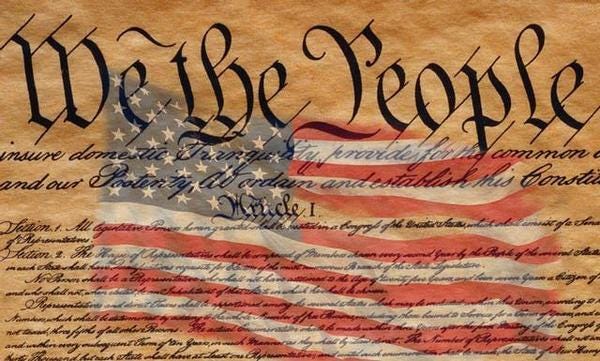
A transformation from “We the People” into “We the Real People.”
That distinction may ultimately determine whether future generations inherit a stronger America.
Or merely a smaller one.
Because nations rarely die when enemies conquer them.
More often they diminish when they forget who they are.
And even more often when they decide that some of their citizens were never truly part of the story in the first place.
CODA
The Roll Call
There is a particular kind of loneliness known only to those who have spent a lifetime serving an idea.
Not a government.
Not a president.
Not a political party.
An idea.
For some Americans, that distinction may seem abstract.
For many Black Americans, it has always been concrete.
Because Black Americans have spent nearly two and a half centuries serving a Republic that often struggled to recognize them as full participants within it.
And yet they served.
That is among the most remarkable facts in all of American history.
They served a nation that enslaved them.
They served a nation that segregated them.
They served a nation that frequently denied them the rights for which they fought.
And yet they served.
Not because America had fully earned their loyalty.
But because they remained loyal to a promise America had not yet fulfilled.
That distinction matters.
It may be among the most important distinctions in the entire American story.
The great tragedy of the Republic has never been merely its failures.
Every nation fails.
The great tragedy has been the repeated willingness of marginalized Americans to keep faith with the nation long after the nation failed to keep faith with them.
Again.
And again.
And again.
Before there was a United States there was a Black man lying dead in the snow of Boston.
The name was Crispus Attucks.
The year was 1770.
Five years before Lexington.
Six years before Independence.
The first blood of the American Revolution flowed from a man who would not have enjoyed the full rights of the nation his death helped bring into existence.
That pattern would repeat itself for generations.
Black Americans fought in the Revolution.
Black Americans fought in 1812.
Black Americans fought in the Civil War.
Nearly 200,000 served in Union blue.
Many understood perfectly well what was at stake.
Not simply Union.
Citizenship.
Belonging.
Recognition.
The right to claim America as their own.
Many died before they ever saw those promises realized.
Still they served.
Then came the Buffalo Soldiers.
Stationed on distant frontiers.
Often despised by those they protected.
Frequently denied opportunities afforded to white counterparts.
Still they served.
Then came the First World War.
Black soldiers returned from Europe having worn the nation’s uniform only to discover that the democracy they defended abroad remained reluctant to defend them at home.
Still they served.
Then came the Second World War.
The Double-V Campaign.
Victory abroad.
Victory at home.
The contradiction became impossible to ignore.
America fought fascism overseas while maintaining segregation within its own ranks.
Yet Black Americans continued fighting.
Flying.
Marching.
Dying.
Serving.
Not because the contradiction disappeared.
Because the promise remained worth pursuing.
The Tuskegee Airmen.
The Red Ball Express.
The 761st Tank Battalion.
The countless names history remembers.
And the countless more history never learned.
Still they served.
Then Korea.
Then Vietnam.
Then Desert Storm.
Then Afghanistan.
Then Iraq.
The generations changed.
The pattern remained.
The Republic gradually improved.
The circle widened.
The nation became more faithful to its own ideals.
Never perfectly.
But undeniably.
Doors opened.
Ranks expanded.
Leadership diversified.
Representation increased.
The American military became one of the most diverse institutions in the nation.
Not because standards fell.
Not because merit disappeared.
Because barriers did.
Because talent long excluded finally found opportunity.
Because citizenship increasingly became reality rather than aspiration.
For many Americans, this evolution became so normal that they forgot how extraordinary it actually was.
For the first time in the nation’s history, increasing numbers of Americans could genuinely look at military institutions and say:
“That institution belongs to me too.”
The significance of that achievement cannot be overstated.
Because belonging is not symbolic.
Belonging is strategic.
Belonging is civic.
Belonging is democratic.
Belonging is power.
This is why memory matters.
Not because history should flatter.
Not because history should comfort.
Not because history should satisfy contemporary political preferences.
Memory matters because memory determines who future generations believe belongs.
When a Black child learns about the Tuskegee Airmen, the lesson is not merely historical.
The lesson is civic.
The message is:
You belong.
When a young woman learns about the WASPs, the lesson is not merely historical.
The message is:
You belong.
When a Native American learns of military service by tribal nations.
When a Muslim American learns of Muslim service members.
When a Jewish American learns of Jewish service members.
When immigrants learn of immigrants.
The lesson remains the same.
You belong.
You belong to this story.
You belong to this nation.
You belong to this Republic.
That is what is ultimately at stake.
Not webpages.
Not bureaucracies.
Not acronyms.
Not political talking points.
Belonging.
There are moments in history when nations reveal what they truly believe.
Not through speeches.
Not through slogans.
Through choices.
Through what they preserve.
Through what they celebrate.
Through what they remove.
Through what they forget.
The choices unfolding today raise uncomfortable questions.
What does it mean when stories of Black service disappear?
What does it mean when stories of female service disappear?
What does it mean when representation becomes suspect?
What does it mean when remembrance itself becomes ideological?
What does it mean when the burden of proving belonging falls disproportionately upon those whose ancestors have already paid for citizenship many times over?
These are not questions about diversity.
They are questions about democracy.
They are questions about the future.
They are questions about whether America remains committed to an ever-expanding definition of “We the People.”
Or whether it is beginning to retreat toward something narrower.
Something older.
Something more tribal.
Something less confident.
Something less democratic.
I confess a personal concern.
Not as an analyst.
Not as a scholar.
Not as a strategist.
As a citizen.
As a soldier.
As a Black American.
As one among millions who spent a lifetime serving a Republic while believing deeply in its promise.
The concern is not that America will suddenly cease being democratic.
The concern is that America may gradually cease being inclusive.
The concern is not that citizenship will disappear.
The concern is that citizenship may become unequal in practice while remaining equal in law.
The concern is not that some Americans will be expelled from the national story.
The concern is that they will be quietly moved to its margins.
Acknowledged.
Tolerated.
Referenced.
But no longer central.
No longer fully seen.
No longer fully remembered.
History teaches us where such paths often lead.
Not immediately.
Not inevitably.
But often enough to warrant attention.
And so we return to Arlington.
To the rows of white stones.
To the quiet.
To the names.
To the generations.
To the Republic itself.
The dead ask very little of the living.
They ask neither agreement nor admiration.
Only honesty.
Only remembrance.
Only the simple recognition that they were here.
That they served.
That they sacrificed.
That they belonged.
The Republic owes them at least that much.
And perhaps it owes itself even more.
Because when a nation begins deciding which of its defenders deserve remembrance, it is not merely editing history.
It is deciding who belongs in the future.
And when a Republic begins narrowing belonging, it risks something far more dangerous than division.
It risks forgetting the very source of its strength.
For the American experiment was never built upon blood.
Never built upon race.
Never built upon tribe.
Never built upon a single faith.
It was built upon a radical proposition.
That people of different origins could become one people.
That citizens could become countrymen.
That constitutional loyalty could prove stronger than ancestry.
That belonging could be chosen rather than inherited.
That proposition remains unfinished.
It remains imperfect.
It remains worth defending.
The question before us is whether it remains worth remembering.
Because if America forgets that story, it may discover too late that it has forgotten itself.
And republics, like people, rarely survive the loss of memory unchanged.
If you value this work, here are three ways you can step into the story with us:
📰 Subscriber (Free)
Stay informed. Receive every new essay, briefing, and analysis straight to your inbox. Join a growing community committed to civic resilience and national security.
🎧 Supporter (Paid Pledge)
Strengthen the signal. Your support sustains both Compound Security, Unlocked and our companion podcast The Civic Brief. Supporters ensure these conversations remain accessible to the wider public while elevating the quality, depth, and reach of the work.
🛡️ Sustainer (Patron Level)
Invest in the mission. Sustainers fuel new research, convenings, and storytelling that enlarge the civic frame of security. This is more than content — it’s a civic project. Your sponsorship helps preserve an independent voice committed to equipping citizens, leaders, and institutions for the compound challenges ahead.
Spot on. We all crave belonging, yet we’ve been sliced into all these different demographic or issue buckets. DEI vs Meritocracy is just the latest divide. I know 2 things can be true and coexist, but that hasn't been the case as of late. I do want the fittest, sharpest troops getting promoted. I also do not want minorities fired, so it is only white dudes left in charge. I still see diversity as a strength, with different people bringing different experiences that can help achieve a common goal. I am channeling some @scottgalloway vibes to find your voice, which might mean leaving the bromance echo chambers for actual, authentic connection. Strong piece.
Are you serious. You get the military wrong right from the start. Army units thru much of WWII were in fact almost completely ‘tribal’ and drawn from regions. Go read ‘The Bedford Boys’ on an entire town of young basically being wiped out in the D-day landing. Have you ever read any actual books on US military history?
Your article fails the most basic fact checks from the very start.