
When Strategy Becomes Heresy
FA59, Civil-Military Dysfunction, and the Deliberate Devaluation of Strategic Thought in America.

The recent downsizing and restructuring of Army Functional Area communities — particularly Functional Area 59 (Strategist) — has generated understandable anxiety within the military profession.
But interpreting these developments merely as another bureaucratic personnel adjustment misses the deeper significance of what is occurring.
This is not simply an argument about billets, branch management, or organizational modernization.
It is an argument about whether the United States still values the institutional capacity for strategic thought itself.
General John Galvin warned of this problem decades ago. Writing at the close of the Cold War, General Galvin argued bluntly: “We need strategists. In the Army and throughout the services. At all levels.”
His concern was not merely organizational efficiency, but whether the United States possessed sufficient officers capable of connecting military force to political purpose, operational feasibility, alliance management, and long-term national strategy.
What is striking today is not simply that Galvin’s warning remains unresolved.
It is that the institutional appetite for such officers may now be actively diminishing.
The Army’s decision to reduce and reorganize portions of the strategist enterprise arrives at precisely the moment the United States faces an increasingly complex security environment characterized by compound crises, converging threats, fractured legitimacy, technological acceleration, and geopolitical transition.
Yet instead of strengthening institutions designed to connect policy, strategy, operational planning, and political consequence, the system appears increasingly suspicious of precisely those forms of intellectual labor required to navigate such complexity.
That irony should concern anyone serious about the future of American statecraft.
The original logic behind the modern strategist enterprise — and particularly the evolution of FA59 after Goldwater-Nichols (see, The Skelton Panel)— was never simply about creating a separate tribe of “policy officers” detached from operations. Nor was it intended to produce abstract academic theorists insulated from the realities of campaigns and warfighting.
The enterprise was supposed to solve a fundamental civil-military problem: the chronic disconnect between political purpose, military planning, operational feasibility, and strategic consequence.
Functional Area 59, by original intention, was to “be(come)” and to produce the Nation’s future cadre of US Army Strategic Policy and Plans Officers — (originally intended to be capped at 300 total officers, with a promotion rank & grad top-end of O6/Colonel). And “the key” was in the conjunction: “And,” not “Or.”
The connective tissue itself was always the mission.
Galvin described the strategist not as a detached theorist, but as an officer “uniquely qualified by aptitude, experience, and education in the formulation and articulation of military strategy.” Crucially, he emphasized that strategists must simultaneously understand tactics, operations, logistics, political constraints, alliance structures, bureaucratic processes, and the human realities of war itself.
In other words, the strategist’s function was never compartmentalization.
It was synthesis.
That distinction matters enormously.
Because the recurring institutional temptation within large bureaucracies is always toward specialization without integration — expertise without connective logic. Yet modern war increasingly punishes exactly that form of fragmentation.
As early critiques of professional military education argued, the United States repeatedly discovered — often only “after” costly operational failures — that tactical excellence alone does not produce strategic coherence.
My own early US Army School of Advanced Military Studies (‘SAMS’) Masters’s Degree monograph on strategist education warned directly against compartmentalized military education systems that separated tactical expertise from strategic understanding and operational art from political context.
The monograph argued that modern military education had become “flawed by design” because it artificially partitioned strategy, operations, and policy into isolated professional silos rather than educating officers capable of integrating all three domains simultaneously.
That critique now appears prophetic.
For decades, FA59 struggled internally with unresolved identity debates: strategist versus planner, theorist versus practitioner, policy intellectual versus operational artist. Those debates were not entirely illegitimate. They reflected genuine tensions embedded within the American civil-military tradition itself.
But over time, the enterprise increasingly became consumed by self-referential professional identity contests precisely when the external environment demanded synthesis.
The harder calling was never choosing between strategy and planning.
It was mastering the difficult work of translation between them.
Ironically, both Galvin and later strategist-education reformers identified this danger long ago. Galvin warned against treating strategy as an “elective” reserved for the later stages of an officer’s career. Instead, he argued that strategic development must begin early and continue continuously across tactical, operational, educational, and institutional assignments.
Likewise, the ‘Wilson (2003)’ critique of professional military education argued that the existing system remained structurally compartmentalized — separating tactical, operational, and strategic learning into disconnected institutional silos.
The tragedy is that both critiques identified the same institutional pathology:
The American military profession became extraordinarily proficient at producing managers of systems while becoming less reliable at cultivating integrative strategic thinkers.
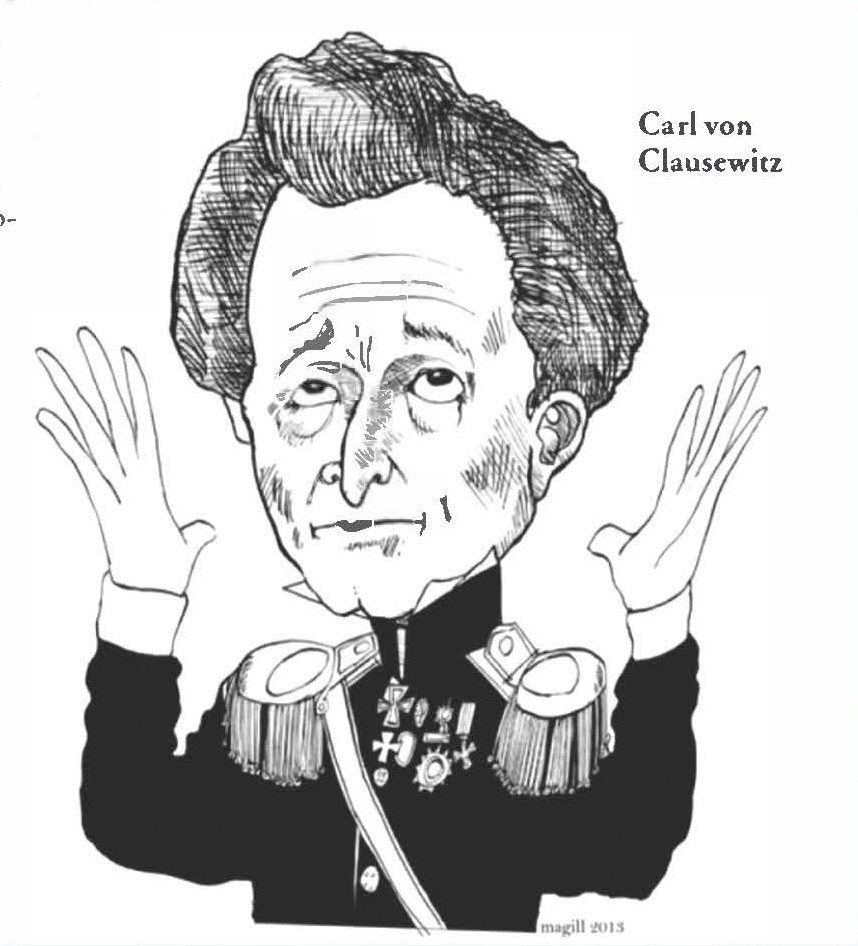
Clausewitz’s enduring insight — that war is a continuation of politics by other means — is often quoted but insufficiently understood. Its real implication is institutional, not merely philosophical. If war is subordinate to policy, then military professionals must possess enough political-strategic understanding to connect violence to political purpose without collapsing professional military judgment into partisan obedience.
That requires officers educated not merely in tactics, targeting, or force management, but in history, political theory, strategic logic, institutional behavior, alliance dynamics, legitimacy, and statecraft itself.
It requires what Morris Janowitz once called the “warrior-scholar.”
Galvin understood this tension clearly. He insisted that strategists in uniform must be capable of advising political authorities not only on military capabilities, but also on “the limits of armed force” and what is “achievable and not achievable by military means.”
That responsibility is foundational to healthy republican civil-military relations.
Professional military judgment is not disobedience.
Strategic skepticism is not insubordination.
Critical analysis is not ideological betrayal.
Indeed, republics depend upon military professionals capable of telling civilian leaders uncomfortable truths precisely when political systems become susceptible to overreach, escalation, fantasy, or emotionally driven decision-making.
Once institutions cease rewarding such judgment, strategic discourse collapses into affirmation culture masquerading as professionalism.
The danger today is not simply that the strategist enterprise is shrinking.
The greater danger is that strategic thought itself is increasingly viewed as politically inconvenient, institutionally inefficient, or ideologically suspect.
This is where the issue transcends personnel management and enters the realm of regime behavior.
History demonstrates a recurring pattern within states entering periods of political stress, ideological rigidity, or institutional insecurity.
First, independent expertise becomes inconvenient.
Then expertise becomes delegitimized.
Then professional judgment becomes subordinated to political conformity.
Then analytical complexity itself becomes treated as disloyalty.
Eventually, the distinction between strategic assessment and political obedience collapses altogether.
That pattern is not uniquely authoritarian. Democracies are not immune to it. In fact, democratic societies often experience these cycles in subtler and more culturally adaptive forms.
The American variant rarely arrives through overt censorship alone. It emerges instead through bureaucratic restructuring, populist anti-elitism, institutional marketization, performative managerialism, and the reduction of intellectual professions into interchangeable administrative labor pools.
The result is not merely anti-intellectualism in the abstract.
It is the erosion of institutional memory and strategic competence.
Galvin directly acknowledged the anti-intellectual undercurrents embedded within military culture itself, noting that in some circles “the very idea of soldiers expounding on strategy is viewed with concern.”
That tension has never fully disappeared.
In many institutions today, intellectual breadth is quietly treated as career risk. Officers are rewarded for administrative fluency, managerial reliability, and bureaucratic conformity far more consistently than for intellectual independence, historical depth, or strategic originality.
Yet history suggests that military organizations which suppress independent strategic thought eventually become tactically busy but strategically hollow.
This becomes especially dangerous during periods of compound security competition, where geopolitical rivalry intersects simultaneously with technological disruption, domestic polarization, information warfare, economic coercion, climate insecurity, migration crises, and legitimacy erosion.
Such environments cannot be managed through purely technical expertise or operational efficiency alone.
They require integrative strategic reasoning.
And yet many contemporary institutions increasingly reward precisely the opposite traits: narrow specialization, bureaucratic compliance, performative certainty, and politically safe managerialism.
Strategists become threatening in such environments because genuine strategy asks uncomfortable questions.
What are the actual political objectives?
Are the objectives achievable?
Are military operations aligned with policy? Are they legal? Ethical? Moral?
What second-order effects are being ignored?
What assumptions govern the campaign?
What happens if escalation dynamics exceed initial expectations?
What if operational success undermines strategic legitimacy?
Institutions under stress often interpret such questions not as professional obligations, but as disloyalty.
That dynamic becomes particularly dangerous in republics because republican governance depends upon maintaining functional distinctions between political authority, professional expertise, and military obedience.
Samuel Huntington’s model of “objective civilian control” rested on precisely this balance: civilian supremacy paired with professional military autonomy within the military sphere of expertise. But Huntington’s framework assumed the continued existence of a respected professional military intellectual class capable of independent strategic judgment. That Huntingtonian assumption has proven all too invalid.
Once professional expertise itself becomes politically suspect, the equilibrium destabilizes.
The consequence is not stronger civilian control.
It is weaker strategy.
The irony is that many of these developments are occurring under the banner of “adaptation,” “flexibility,” and “modernization.” Official explanations surrounding the FA59 restructuring emphasize permeability, fluid talent management, and alignment with technological change.
Some of those reforms may indeed be necessary.
But institutional adaptation is not inherently synonymous with strategic wisdom.
A military organization can become more administratively agile while simultaneously becoming intellectually brittle.
And that brittleness carries profound consequences during periods of geopolitical transition.
The United States now operates within what increasingly resembles a compound security environment: one where war and peace blur together; where state and non-state threats intersect; where domestic political fractures influence external strategic credibility; where technological systems alter both cognition and conflict; and where military force alone proves insufficient for achieving sustainable political outcomes.
Such environments demand strategists capable of bridging tactical execution, operational design, policy formulation, and geopolitical consequence simultaneously.
The original vision behind the strategist enterprise recognized precisely this requirement.
Ironically, the ‘Wilson (2003)’ early critique warned against educational systems that compartmentalized strategic learning away from operational practice and tactical experience. It argued instead for the creation of “complete strategists” educated across all domains of war and policy simultaneously.
That vision was difficult.
It required broad intellectual formation, institutional humility, interdisciplinary education, operational credibility, and tolerance for ambiguity.
But that difficulty was precisely the point.
Strategy is difficult because reality is difficult.
And republics ignore that truth at their peril.
The challenge facing the United States today is therefore far larger than preserving a functional area or defending an institutional guild.
The real issue is whether the republic still possesses the institutional seriousness required to cultivate strategic judgment.
General Galvin warned that strategists cannot be created “instantly” during moments of crisis. They require years of education, operational experience, historical study, intellectual development, institutional mentorship, and self-cultivation. They require a professional culture willing to reward reflection as much as performance, thought as much as process, judgment as much as compliance.
Such individuals are difficult to cultivate precisely because they exist at the uncomfortable intersection of policy, war, politics, legitimacy, and consequence.
But republics need them most during periods of systemic stress.
The United States now confronts a geopolitical environment defined by compound security competition, blurred distinctions between war and peace, technological acceleration, institutional distrust, and intensifying ideological polarization.
Such conditions demand not fewer strategists, but better ones — officers and civilian leaders capable of integrating political purpose, operational design, legitimacy, alliance management, and strategic restraint simultaneously.
Because when policy detaches from reality, and planning detaches from policy, institutions do not become more adaptive.
They become more delusional.
And when states lose the ability to cultivate independent strategic judgment, they do not merely weaken intellectually.
They begin to lose the capacity for republican governance itself.
If you value this work, here are three ways you can step into the story with us:
📰 Subscriber (Free)
Stay informed. Receive every new essay, briefing, and analysis straight to your inbox. Join a growing community committed to civic resilience and national security.
🎧 Supporter (Paid Pledge)
Strengthen the signal. Your support sustains both Compound Security, Unlocked and our companion podcast The Civic Brief. Supporters ensure these conversations remain accessible to the wider public while elevating the quality, depth, and reach of the work.
🛡️ Sustainer (Patron Level)
Invest in the mission. Sustainers fuel new research, convenings, and storytelling that enlarge the civic frame of security. This is more than content — it’s a civic project. Your sponsorship helps preserve an independent voice committed to equipping citizens, leaders, and institutions for the compound challenges ahead.