

By Isaiah Wilson III, Ph.D.
Author Bio
Dr. Ike Wilson is a strategist and applied theorist specializing in systemic competition, resilience, and legitimacy in modern conflict. His work focuses on compound security dynamics, integrative statecraft, and the redesign of strategy for an era in which the system—not the state—is the primary unit of analysis.
The Failure of Traditional Optics
In February 2022, as Russian forces crossed into Ukraine, much of the world interpreted the event through a familiar lens: tanks, territory, and territorial conquest. Yet even as armored columns advanced, a parallel war was already underway—cyberattacks on infrastructure, manipulation of energy markets, and coordinated disinformation campaigns targeting Western publics. Financial volatility surged, energy dependencies were exposed, and competing narratives flooded global media ecosystems, shaping perceptions as much as events on the ground. The invasion did not mark the beginning of the conflict; it marked its most visible phase.¹
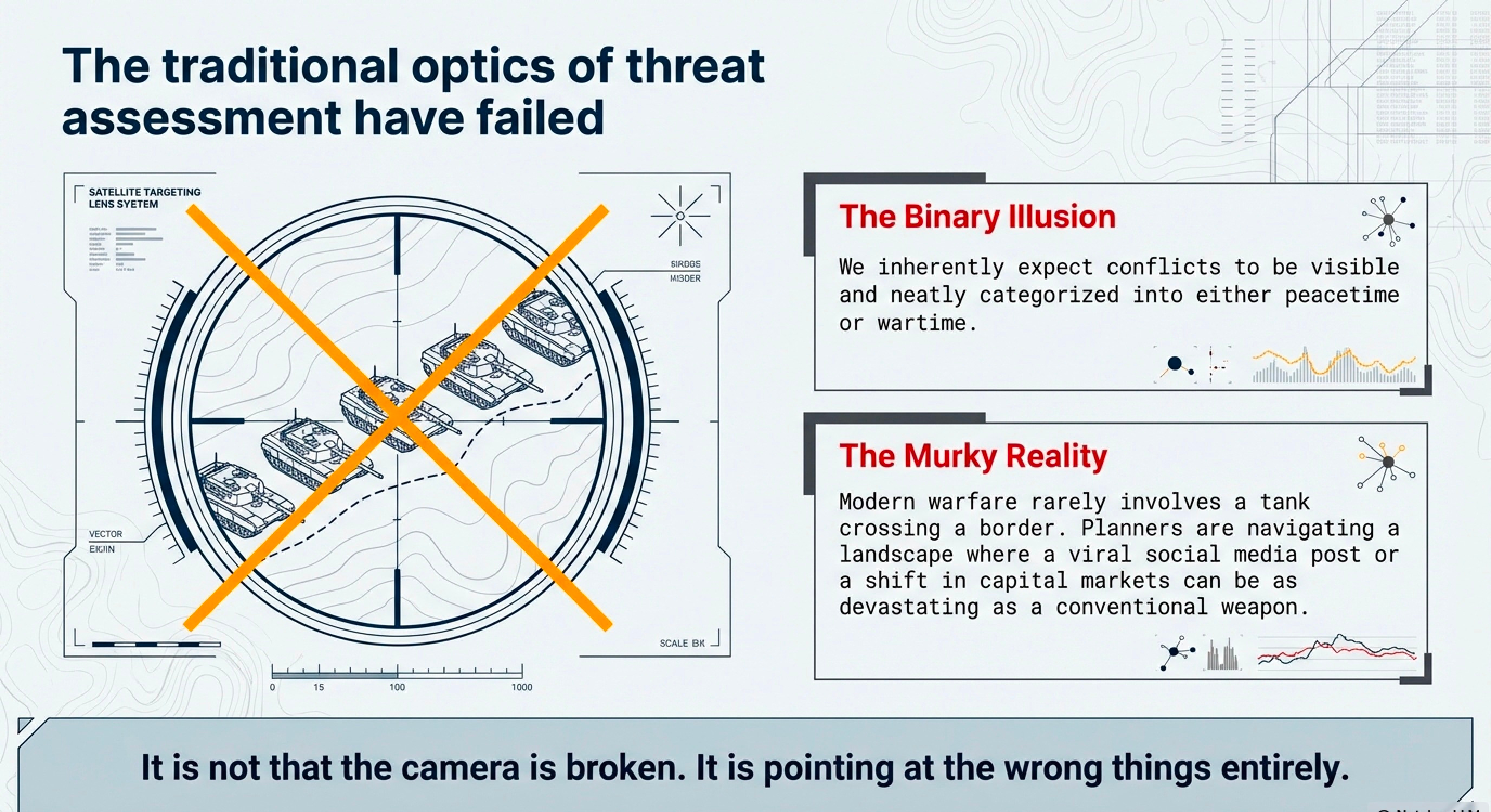
This misreading reflects a deeper analytical failure. For decades, strategists have relied on a model of conflict that assumes war is episodic, visible, and geographically bounded. Indicators such as troop mobilizations, weapons deployments, and territorial incursions were treated as primary signals of intent. But as recent analytical frameworks demonstrate, “it is not that the camera is broken—it is pointing at the wrong things entirely.” The traditional optics of threat assessment—focused overwhelmingly on kinetic indicators—systematically miss the mechanisms through which modern rivals generate advantage long before violence becomes visible.
The result is a persistent lag between how competition is waged and how it is understood. Policymakers react to manifestations rather than mechanisms, treating symptoms rather than systems. By the time conflict becomes legible through conventional indicators, the underlying strategic conditions—public sentiment, economic dependencies, institutional vulnerabilities—have often already been shaped. In this sense, the greatest danger is not surprise attack, but strategic misdiagnosis.
The Paradigm Shift: From War to Compound Competition
The defining feature of contemporary rivalry is not escalation, but convergence. Conflict no longer unfolds as a linear progression from peace to war; instead, it manifests as a continuous condition in which adversaries apply synchronized pressure across military, economic, informational, and political domains.² These pressures are not sequential but simultaneous, interacting in ways that amplify their cumulative effect.
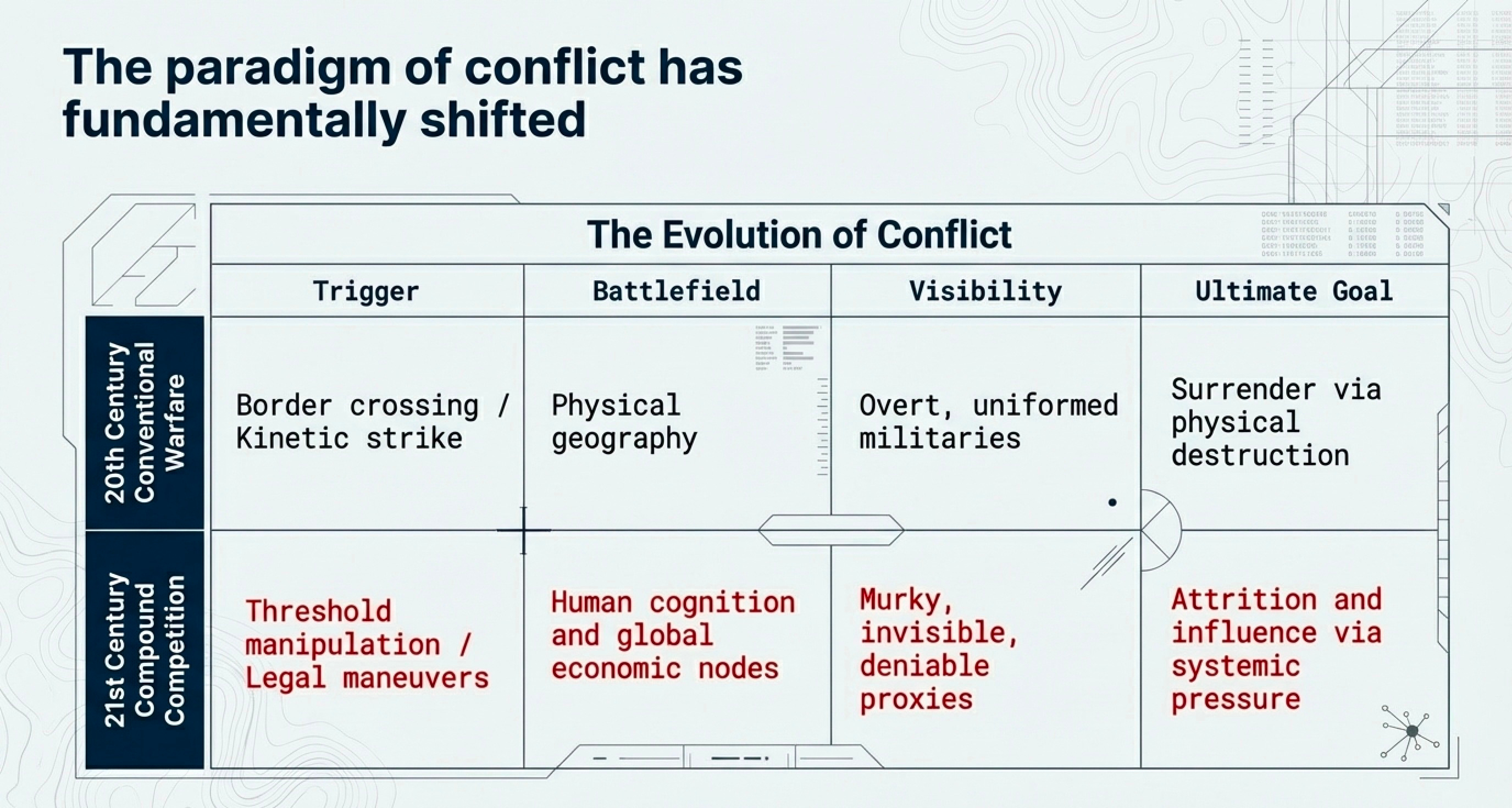
This shift marks the transition from industrial-era warfare—characterized by mass, maneuver, and decisive battle—to what can be termed compound security competition. In this paradigm, the objective is not to defeat an adversary’s armed forces outright, but to shape the environment in which those forces—and the societies that sustain them—operate. The focus moves from outcomes to conditions, from events to systems.
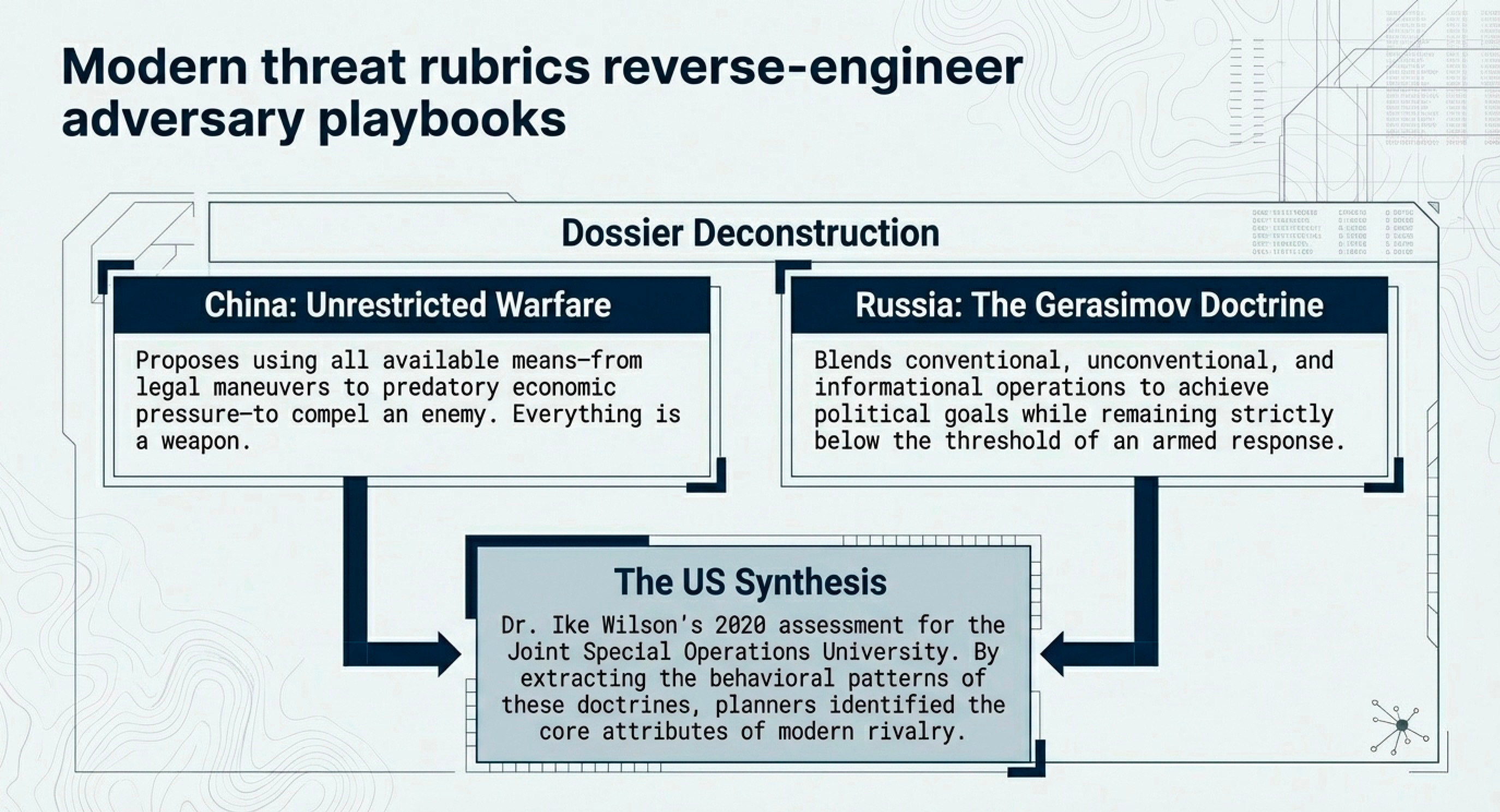
Chinese military theorists anticipated this transformation decades ago, arguing that “everything is a weapon,” from financial instruments to legal frameworks.³ Russian doctrine similarly emphasizes the integration of military and non-military means to achieve strategic objectives below the threshold of open war.⁴ These approaches are not anomalies but manifestations of a broader systemic logic: that influence, disruption, and shaping operations can achieve strategic effects without triggering conventional responses.
What distinguishes compound competition is not merely the expansion of tools, but the synchronization of effects. Economic coercion reinforces narrative warfare; cyber intrusions enable political manipulation; military signaling amplifies psychological pressure. The result is a strategic environment in which boundaries—between domains, between actors, between war and peace—are increasingly blurred.
The New Grammar of Conflict: Six Attributes of Rivalry
To understand compound competition, one must move beyond discrete events and examine patterns of behavior. Across cases, six recurring attributes define the modern grammar of conflict.
Narrative warfare operates at the level of cognition, shaping how populations interpret reality, history, and legitimacy. Civilian interventions embed influence within ostensibly benign systems—commercial ventures, infrastructure projects, regulatory frameworks—creating dual-use leverage. Coercive signaling communicates intent and capability without direct engagement, leveraging ambiguity to induce restraint or compliance. Denial of prosperity exploits economic interdependence, turning trade, finance, and energy into instruments of pressure. Infiltration penetrates systems from within, mapping vulnerabilities and enabling future action. Proxy and surrogate operations externalize conflict, allowing states to pursue objectives while maintaining plausible deniability.
These attributes are not independent variables; they are mutually reinforcing components of a broader strategy. Their effectiveness derives from their interaction. A disinformation campaign gains credibility when paired with economic pressure; a cyber intrusion becomes more consequential when aligned with political manipulation. By synchronizing these actions, adversaries create effects that are nonlinear, compounding, and difficult to attribute with precision.⁵
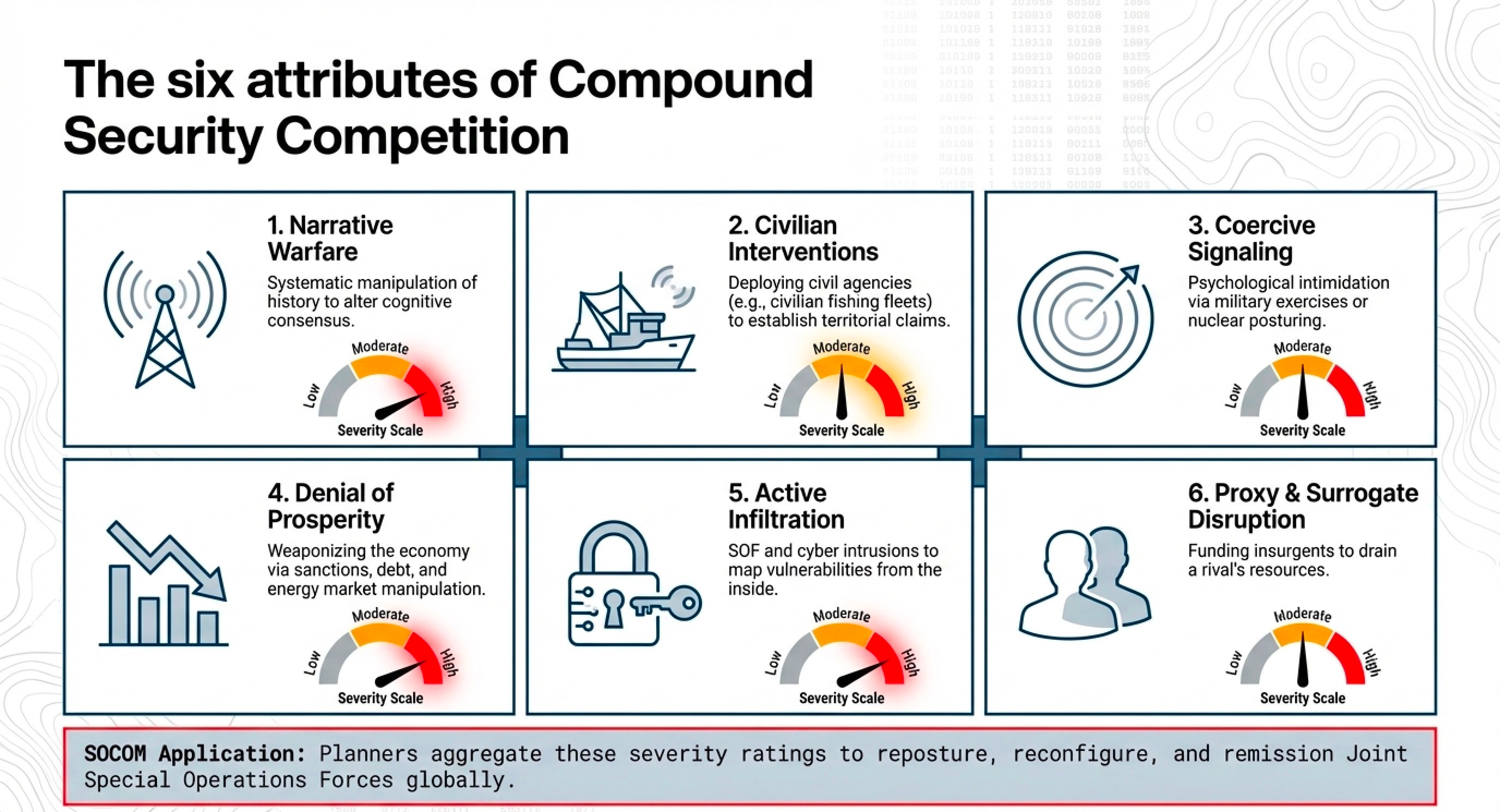
The analytical challenge, therefore, is not simply to identify individual actions, but to understand how they combine to produce systemic outcomes. This requires a shift from event-based analysis to pattern recognition, from isolated indicators to integrated assessment.
From Geography to Systems: Nodes and Nexuses
In traditional warfare, “key terrain” referred to physical features—hills, chokepoints, and cities—that conferred tactical advantage. In compound competition, key terrain has shifted to nodes and nexuses: points where physical infrastructure, economic flows, and human systems intersect.
Ports, energy grids, financial clearinghouses, telecommunications networks, and digital platforms are now the decisive spaces of competition. These are not merely supporting elements of state power; they are the connective tissue of the global system. Control—or influence—over these nodes enables disproportionate strategic leverage.
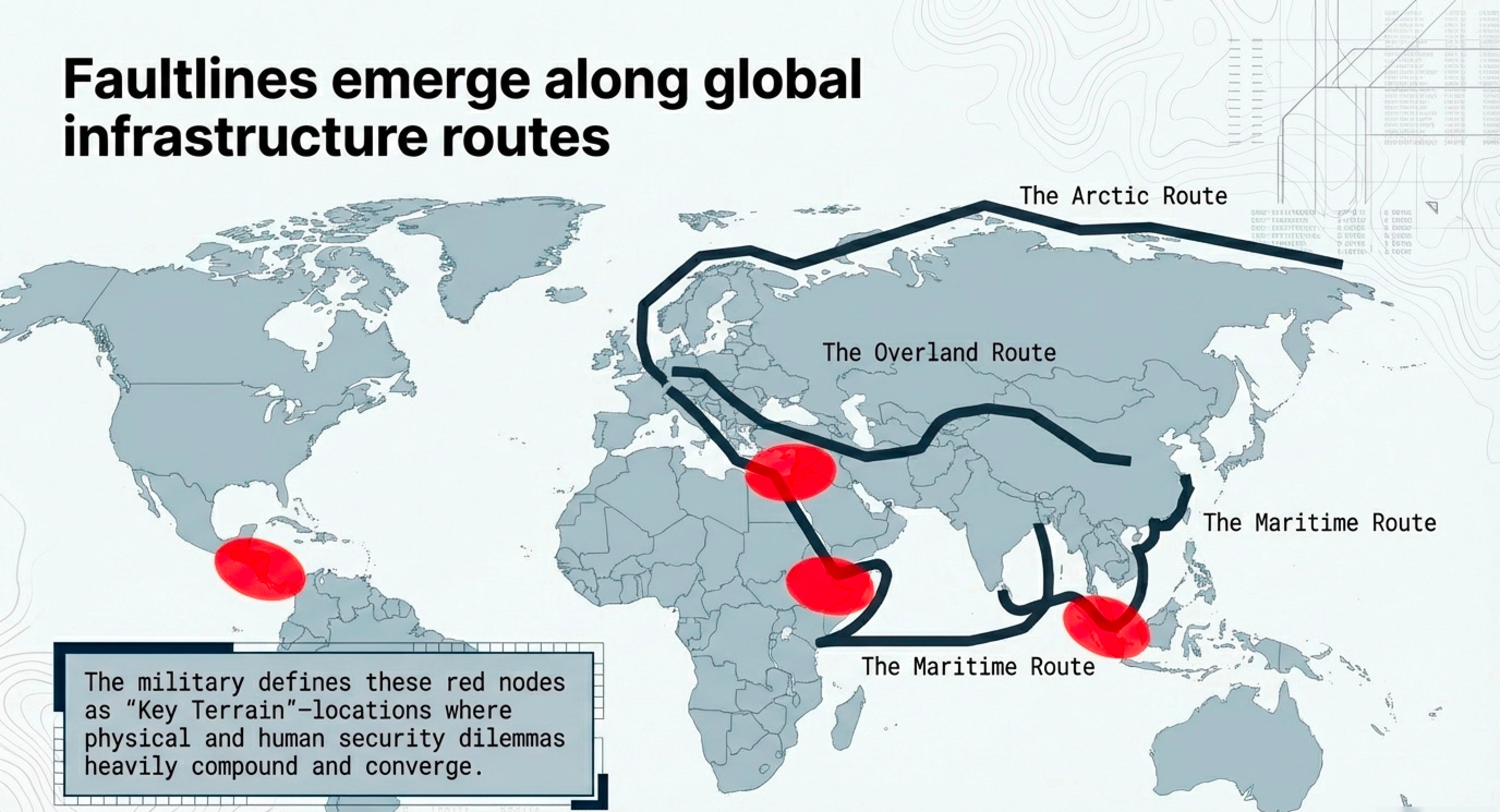
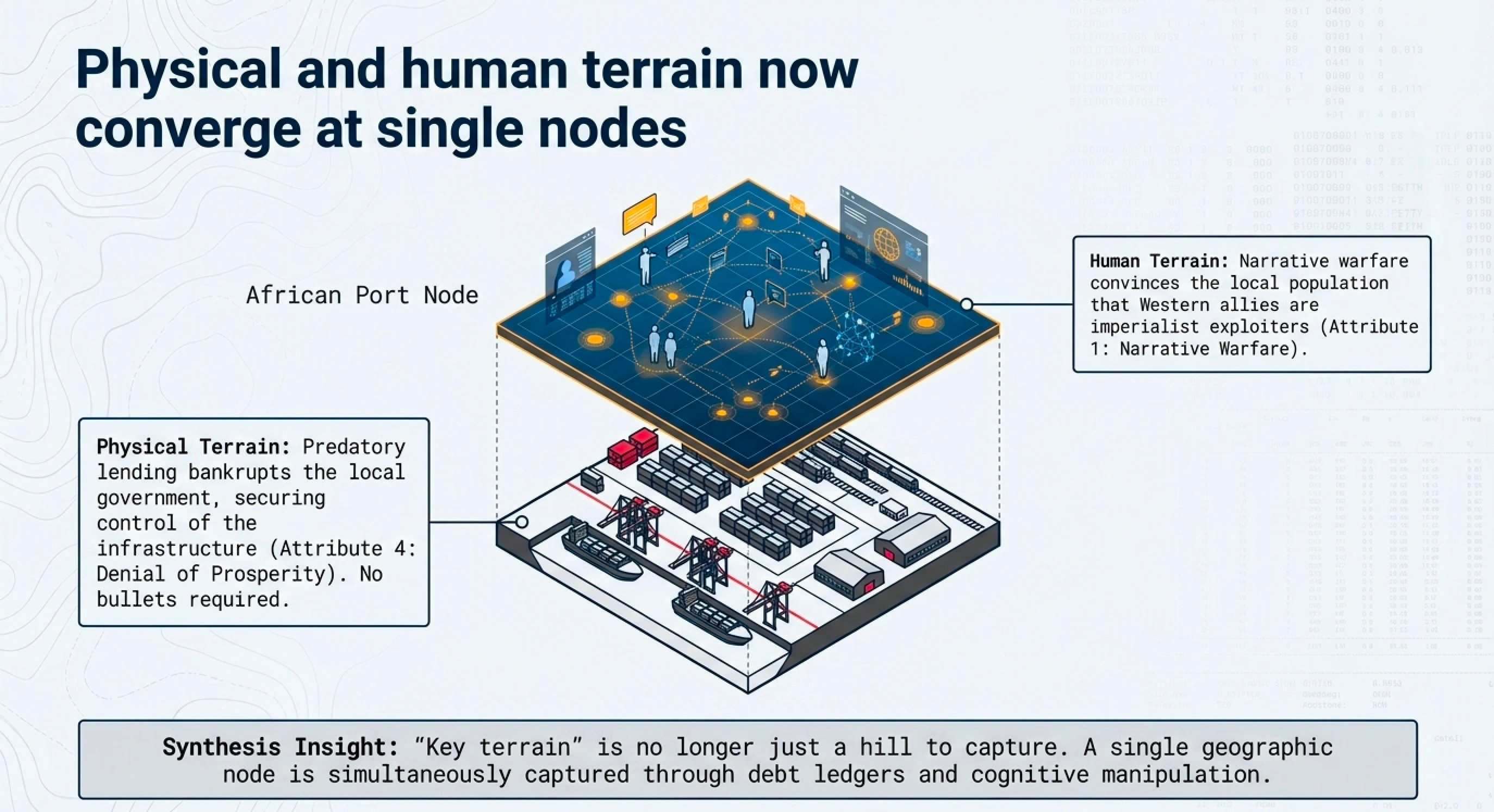
As illustrated in the framework, a single node—such as a major port—can be simultaneously influenced through debt financing, labor relations, regulatory capture, information campaigns, and cyber access. This multidimensional engagement allows an actor to shape outcomes without overt control, creating dependencies that can be activated in times of crisis.
This convergence transforms the nature of control itself. Territory need not be occupied to be dominated; it can be shaped through systemic leverage embedded in the infrastructure of globalization.⁶ The strategic question is no longer “Who holds the ground?” but “Who shapes the system?”
The Primary Target: The Population as Center of Gravity
Perhaps the most consequential shift is the redefinition of the target. In compound competition, the primary audience is not the state’s leadership but its population.
Analytical models highlight an “asymmetric targeting pyramid,” in which the overwhelming majority of effort is directed at the broader public rather than elite decision-makers. This reflects a fundamental insight: in systems dependent on legitimacy, consent, and social cohesion, influencing perception can yield greater strategic effects than destroying capability.
Populations are not passive recipients of policy; they are active components of the system. Their beliefs shape political outcomes, their behaviors influence economic performance, and their cohesion determines resilience under pressure. By targeting this layer, adversaries can induce systemic effects indirectly.
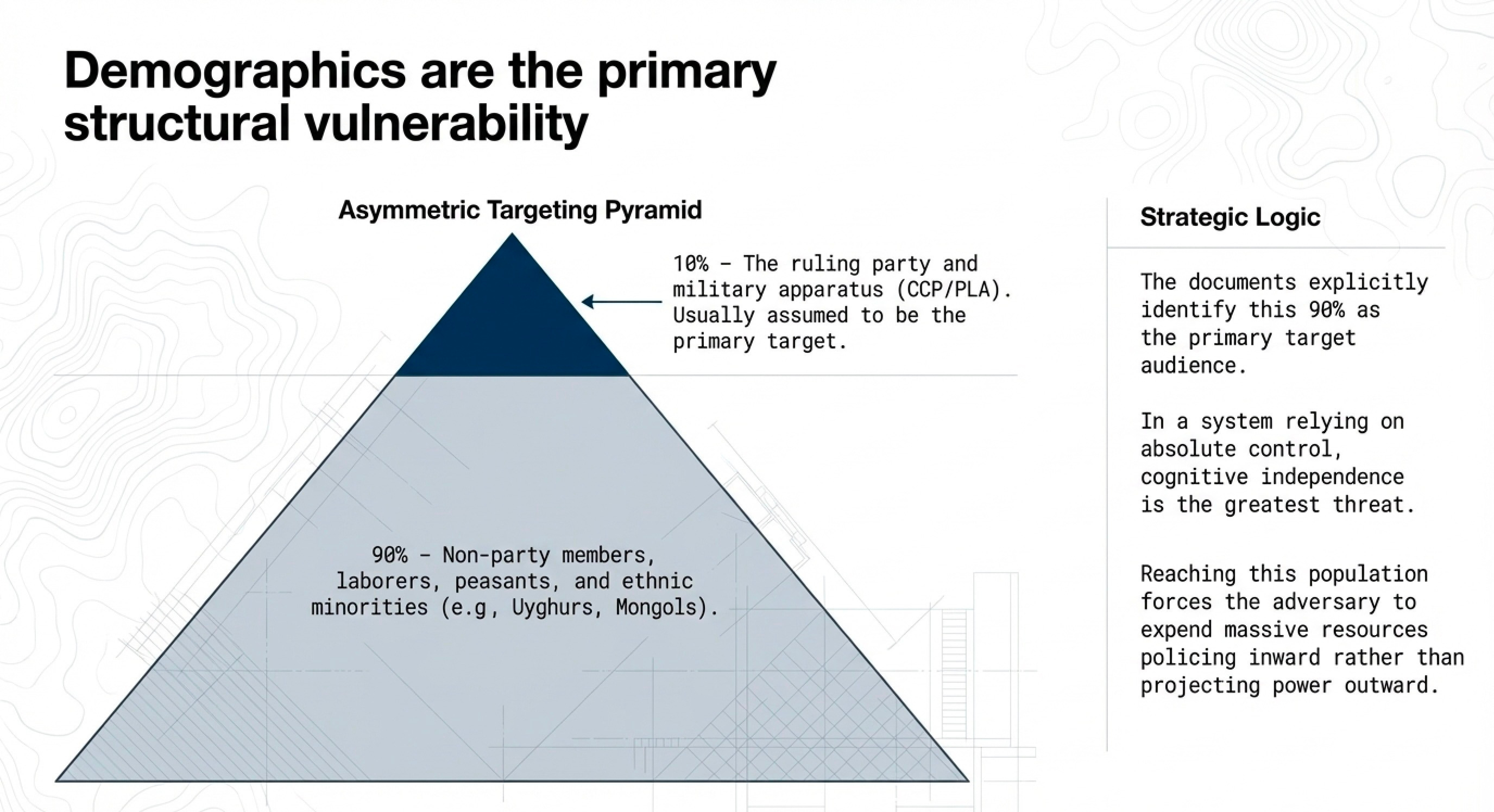
Information operations, economic pressure, and social manipulation are thus designed to erode trust, fragment cohesion, and redirect political behavior. As Joseph Nye has argued, power in the modern era increasingly depends on the ability to shape preferences rather than compel action.⁷ In this context, legitimacy becomes both a strategic asset and a vulnerability.
Operating in the Adversary’s System
If populations are the target, then operations must occur within the adversary’s own systems. This creates a fundamentally asymmetric and constrained environment.
As one framework describes it, competing in this space is akin to “playing in a casino where the adversary owns the cameras, writes the code, and deals the cards.” Information ecosystems are monitored, filtered, and manipulated, creating a landscape in which external actors operate at a structural disadvantage.
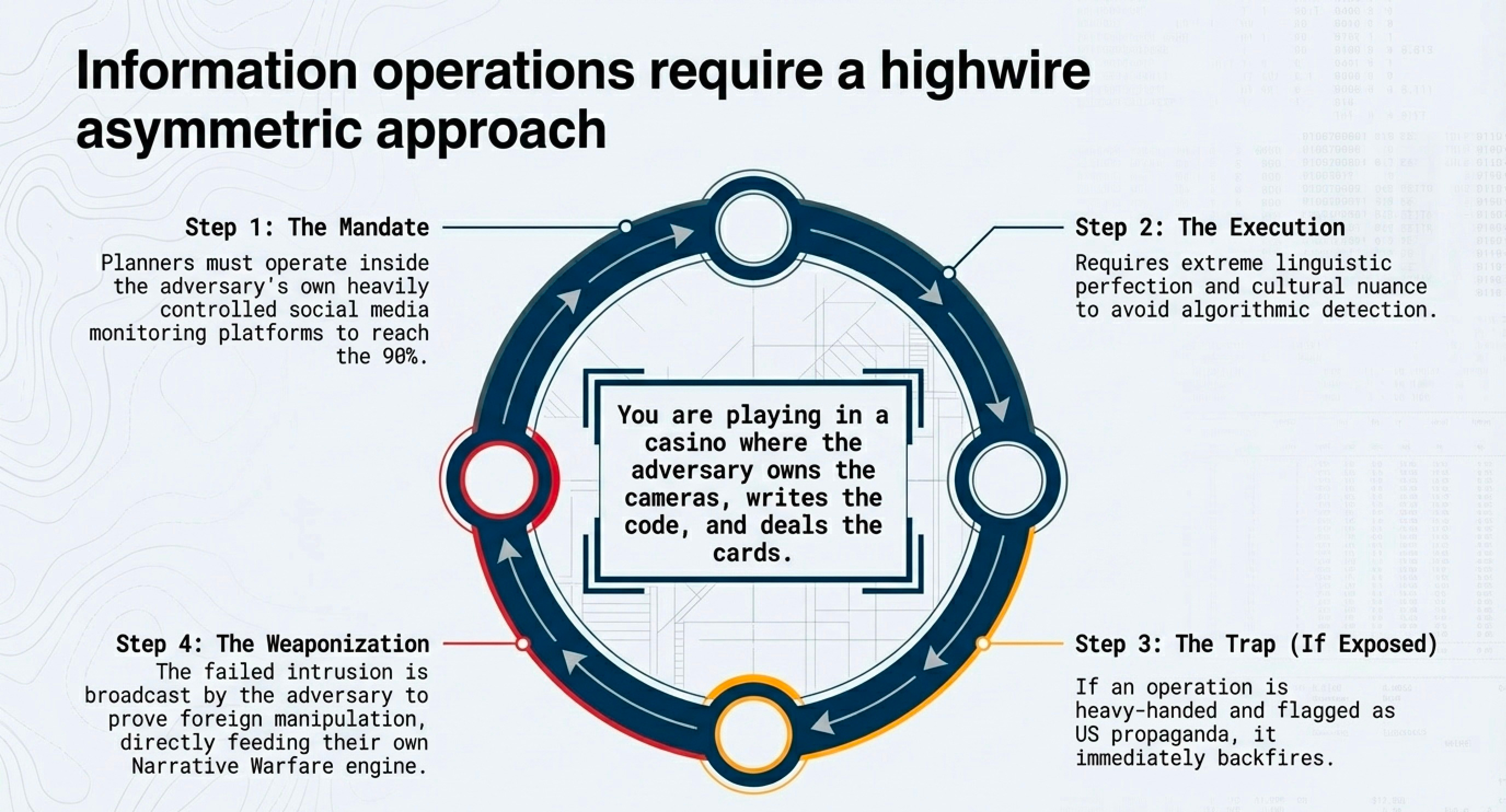
This asymmetry imposes strict constraints on action. Messaging must navigate linguistic nuance, cultural context, and algorithmic detection. Economic interventions must account for regulatory environments and countermeasures. Cyber operations must balance access with exposure.
Failure carries significant risk. Poorly calibrated actions can be exposed and weaponized by the adversary, reinforcing their narrative and legitimizing internal control.⁸ Success, therefore, requires not only technical capability, but deep contextual understanding and strategic patience.
Case Study: Russia’s War Against Ukraine
Russia’s war against Ukraine illustrates the full spectrum of compound competition in practice. While the invasion brought conventional warfare back to Europe, it has always been embedded within a broader strategy that integrates multiple domains.
Cyberattacks targeted Ukrainian infrastructure and Western institutions. Energy exports were manipulated to influence European political dynamics. Disinformation campaigns sought to fracture public support for Ukraine and erode confidence in democratic institutions.⁹ These efforts were not ancillary; they were central to the strategy.
At the same time, Ukraine’s response has highlighted the importance of systemic resilience. Its ability to maintain governance, mobilize its population, and sustain international legitimacy has offset material disadvantages. Digital communication strategies, decentralized resistance, and effective alliance management have all contributed to its endurance.
The conflict demonstrates that outcomes are determined not solely by battlefield performance, but by the resilience of interconnected systems.¹⁰
Case Study: Persistent Pressure in the Indo-Pacific
In the Indo-Pacific, competition over Taiwan reveals a different but equally instructive application of compound strategy. Here, the emphasis is not on immediate invasion, but on sustained, multidimensional pressure.
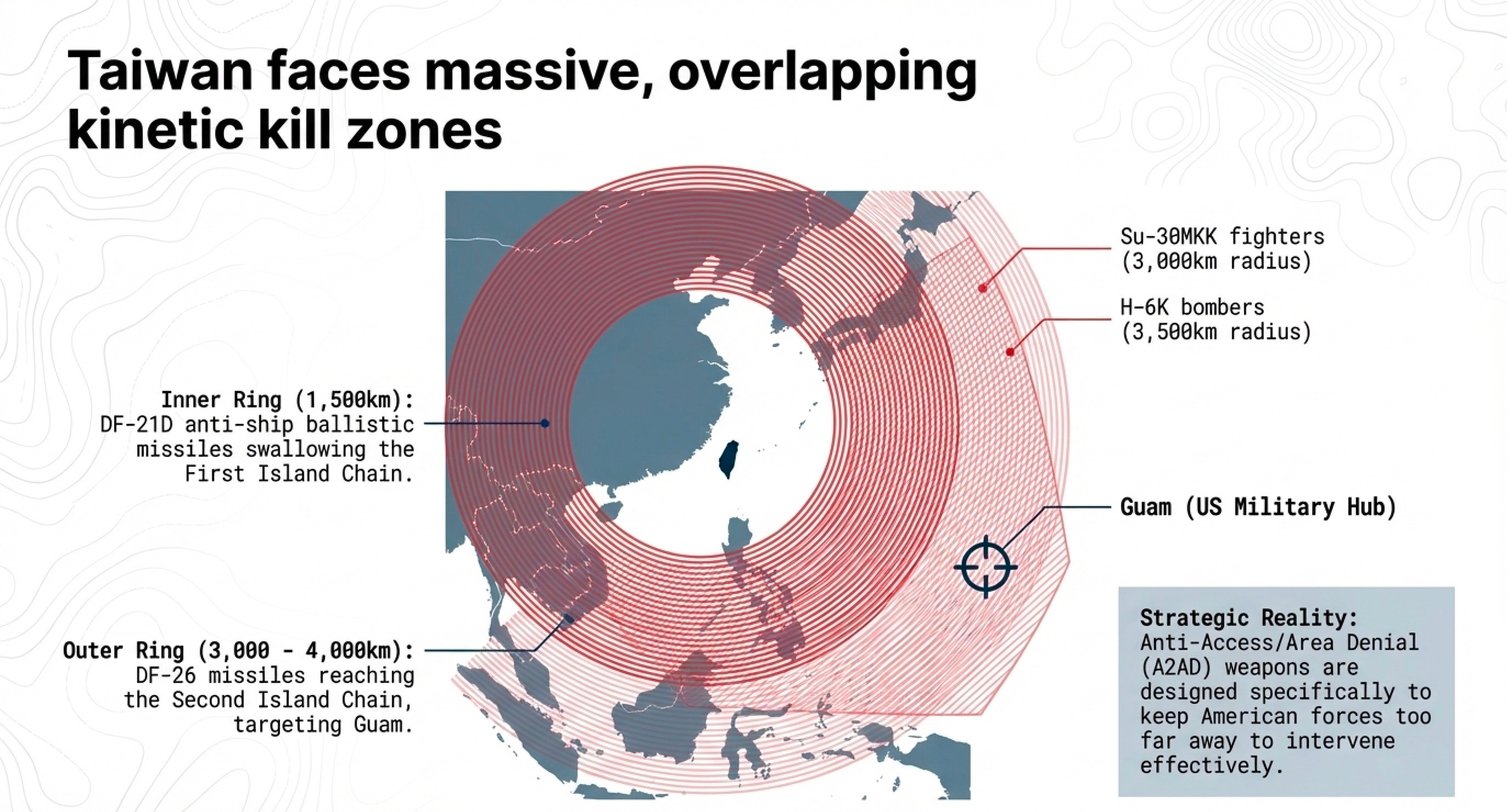
Frequent air and maritime incursions create a constant operational tempo that strains resources and readiness. Economic coercion targets key industries and trade relationships. Information operations seek to shape domestic and international perceptions. Together, these actions create a condition of persistent tension.
As analytical models show, layered anti-access systems generate overlapping zones of risk, while non-kinetic actions impose continuous psychological and economic pressure. The objective is not decisive conflict, but gradual attrition—reshaping the strategic environment over time.
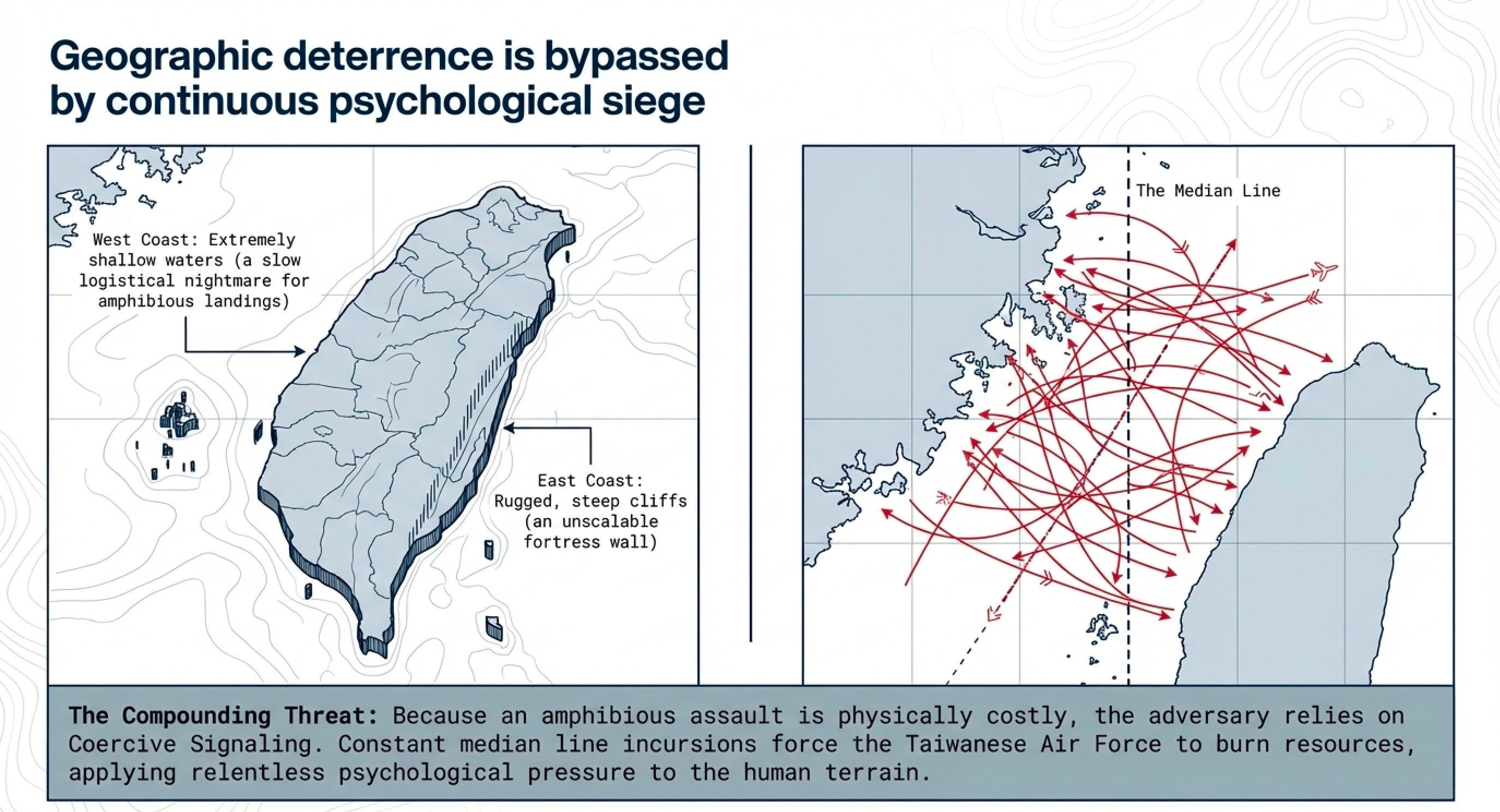
This approach reflects a broader logic of compound competition: that sustained pressure, applied across domains, can achieve strategic outcomes without crossing thresholds that would trigger large-scale war.
Case Study: The USA–Israel–Iran Compound Contagion War
The ongoing confrontation among the United States, Israel, and Iran represents the clearest contemporary example of compound security competition evolving into systemic contagion—a form of conflict in which pressures propagate across regions, domains, and systems faster than any single actor can control.
What began as a shadow conflict—cyber operations, proxy engagements, covert strikes, and economic pressure—has now escalated into overt military action. In February 2026, coordinated U.S. and Israeli strikes targeted Iranian nuclear infrastructure, military assets, and leadership nodes, triggering a cascade of retaliatory missile and drone attacks across the region. Iran’s response extended beyond Israel to include U.S. bases and allied territories across the Middle East, illustrating the inherently transregional nature of the conflict system.
Yet to interpret this as a conventional war would be to repeat the very analytical error this article critiques. The kinetic exchange is only the most visible layer of a far broader competitive system already in motion.
First, the conflict operates through multi-domain synchronization. Military strikes are paired with cyber disruptions, economic signaling in global energy markets, and narrative campaigns targeting regional and global audiences. Oil infrastructure disruptions, diplomatic signaling, and information operations are not ancillary effects—they are integral components of the strategic design.
Second, the conflict demonstrates systemic spillover across nodes and nexuses. Iranian retaliatory actions have affected not only immediate combatants but also third-party states, energy corridors, and maritime routes. Attacks and disruptions have extended to Gulf infrastructure, regional diplomatic hubs, and global shipping pathways, underscoring how localized actions propagate through interconnected systems. What emerges is not a contained battlespace, but a networked conflict environment in which effects cascade outward.
Third, the confrontation highlights the centrality of proxy and surrogate warfare as systemic amplifiers. Armed groups aligned with Iran operate across multiple theaters, enabling distributed pressure without centralized escalation. This creates a condition in which the conflict is simultaneously localized and globalized—fragmented in execution, but unified in strategic effect.
Fourth, and most critically, the conflict underscores the role of legitimacy and narrative as decisive terrain. Competing actors are not only targeting military capabilities but also shaping international perception, domestic cohesion, and alliance dynamics. Competing narratives—deterrence versus aggression, stability versus escalation—are deployed to influence global opinion and constrain adversary options.
The result is a form of warfare that is neither fully bounded nor fully controllable. Even as kinetic exchanges occur, diplomatic channels remain active, and economic interdependence persists. Negotiations continue alongside strikes; escalation coexists with restraint. This coexistence is not contradictory—it is characteristic of compound competition.
What makes this case particularly significant is its demonstration of compound contagion. Actions in one domain or region trigger second- and third-order effects elsewhere: a strike on nuclear infrastructure affects energy markets; a proxy attack influences alliance cohesion; a narrative campaign reshapes diplomatic positioning. The system itself becomes the medium through which conflict spreads.
This dynamic reveals a critical strategic insight: escalation is no longer linear. It is networked, recursive, and often non-intuitive. Efforts to control escalation through traditional means—geographic containment, proportional response, or deterrent signaling—are increasingly insufficient in a system where effects propagate across interconnected domains.
For strategists, the implication is profound. The challenge is not merely to manage bilateral conflict, but to understand and shape the broader system within which that conflict unfolds. Failure to do so risks not only tactical miscalculation, but systemic instability.
The USA–Israel–Iran confrontation is therefore not simply a regional war. It is a live demonstration of compound security competition at scale—a conflict in which the boundaries between war and peace, regional and global, kinetic and non-kinetic have effectively collapsed into a single, continuously evolving system.
Redefining Success: From Victory to Resilience
In this environment, traditional definitions of victory are increasingly irrelevant. Capturing territory, destroying forces, or compelling surrender does not resolve the underlying dynamics of competition.
Instead, success must be understood as a continuous condition—the ability to sustain system integrity, manage thresholds, and maintain legitimacy over time.¹¹ This requires a shift in strategic mindset, from seeking decisive outcomes to managing ongoing processes.
Deterrence, in this context, is not solely about punishment, but about resilience. Systems that can absorb shocks, adapt to disruption, and recover quickly are less vulnerable to coercion. This shifts the focus from preventing action to mitigating its effects.
Strategy becomes iterative rather than linear, adaptive rather than prescriptive. It is less about winning a war than about remaining competitive within a persistent contest.
Toward a New Strategic Framework
Meeting the demands of compound competition requires a fundamental rethinking of how strategy is developed and executed. Traditional planning processes—hierarchical, episodic, and domain-specific—are ill-suited to a dynamic, interconnected environment.
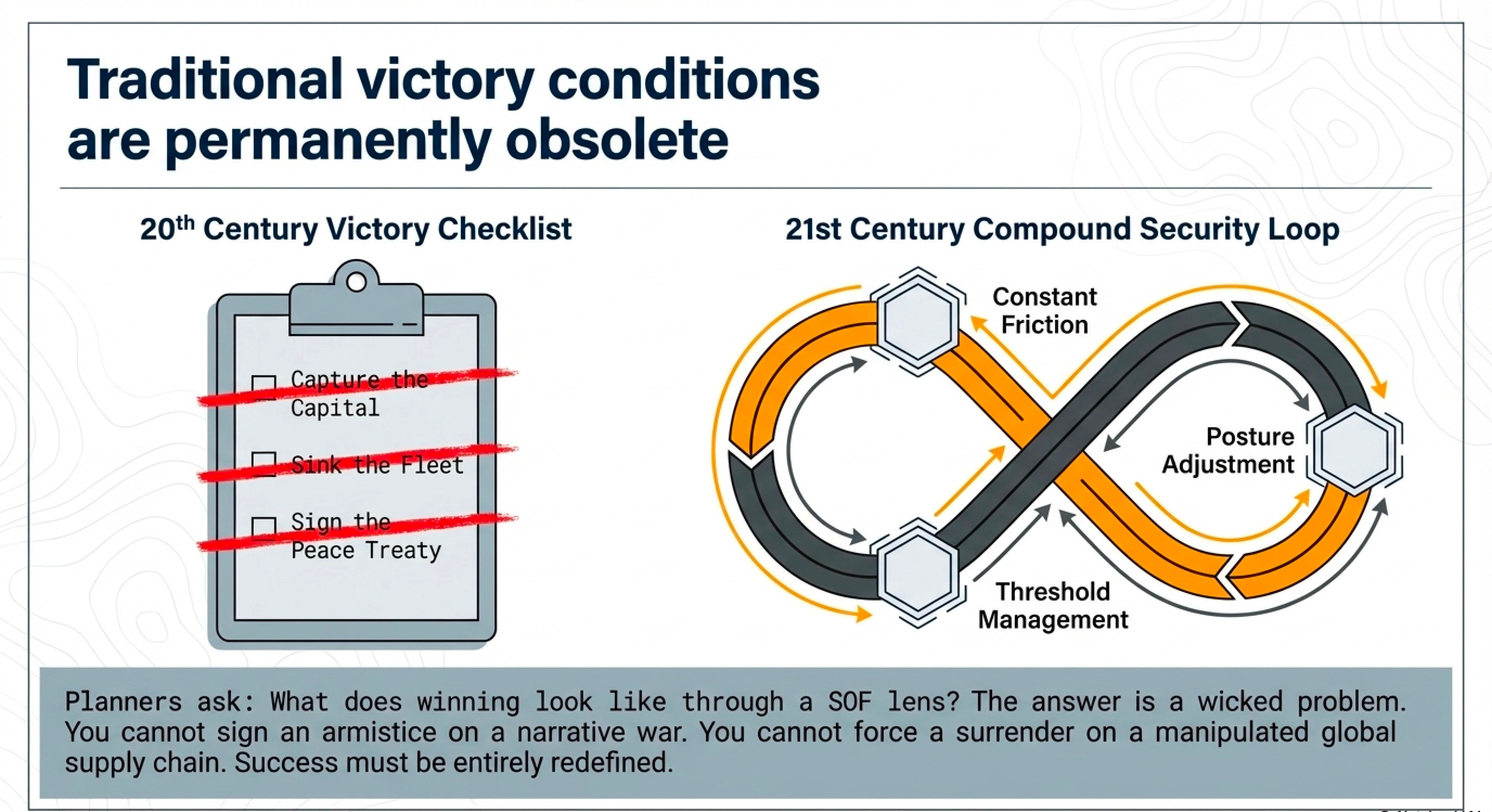
Effective approaches must be iterative, collaborative, and cross-functional. Planning must integrate insights from across the full spectrum of national power, combining military analysis with economic, informational, and political perspectives.
This entails the creation of integrated teams operating in continuous cycles of assessment, planning, and adjustment. It requires mechanisms for rapid feedback, shared situational awareness, and synchronized action across domains.
The objective is not to produce a static plan, but to enable continuous strategic adaptation—a living process that evolves alongside the environment it seeks to shape.¹²
The Total Force in a Systemic Contest
In compound competition, no single instrument of power is sufficient. Success depends on the integration of the total force—conventional military capabilities, unconventional elements, and civilian institutions operating in concert.
Each component contributes distinct advantages. Conventional forces provide deterrence and visible capability. Unconventional elements offer access, agility, and influence within complex environments. Civilian institutions bring economic tools, regulatory authority, and informational reach.
The challenge lies not in coordination alone, but in true integration—aligning these capabilities within a coherent framework that operates at the level of the system. This requires shared understanding, common objectives, and mechanisms for synchronization across organizational boundaries.
Only through such integration can states effectively compete in an environment defined by convergence and complexity.
Conclusion: The Frontline Is Everywhere
The most profound implication of compound competition is that the frontline is no longer distinct from everyday life.
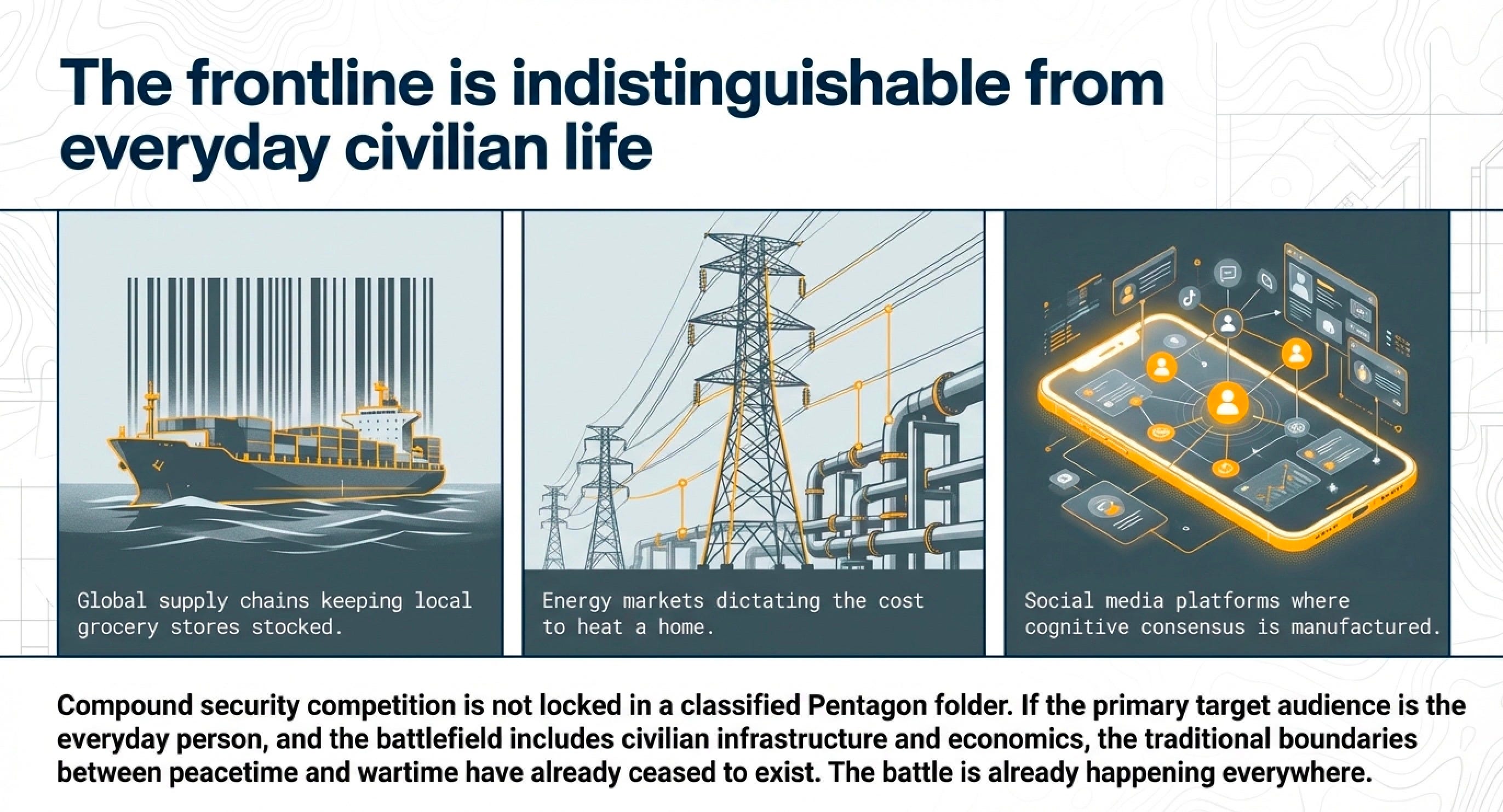
Global supply chains, energy markets, and digital platforms are not peripheral to conflict; they are central to it. The systems that sustain modern societies are the same systems through which competition is waged.
This convergence dissolves traditional boundaries—between war and peace, civilian and military, domestic and international. It creates a strategic environment in which conflict is continuous, diffuse, and deeply embedded in the fabric of daily life.
Strategy must evolve accordingly. It must move beyond the pursuit of decisive victory and toward the cultivation of resilient systems. It must prioritize legitimacy, adaptability, and integration.
The question is no longer how to win the next war.
It is how to endure—and prevail—in a world where war is no longer an event, but a condition.
Footnotes
Lawrence Freedman, Command: The Politics of Military Operations from Korea to Ukraine (Oxford: Oxford University Press, 2022).
Frank G. Hoffman, “Hybrid Warfare and Challenges,” Joint Force Quarterly 52 (2009).
Qiao Liang and Wang Xiangsui, Unrestricted Warfare (Beijing: PLA Literature and Arts Publishing House, 1999).
Valery Gerasimov, “The Value of Science in Prediction,” Military-Industrial Courier (2013).
T.X. Hammes, “The Evolution of Warfare,” Marine Corps Gazette (2004).
Henry Farrell and Abraham Newman, “Weaponized Interdependence,” International Security 44, no. 1 (2019).
Joseph S. Nye, The Future of Power (New York: PublicAffairs, 2011).
Thomas Rid, Active Measures (New York: Farrar, Straus and Giroux, 2020).
Keir Giles, Russia’s War on Everybody (Washington, DC: Brookings Institution Press, 2022).
Phillips O’Brien, “The Russian Way of War,” Survival 64, no. 5 (2022).
David Kilcullen, The Dragons and the Snakes (Oxford: Oxford University Press, 2020).
H.R. McMaster, Battlegrounds (New York: Harper, 2020).
If you value this work, here are three ways you can step into the story with us:
📰 Subscriber (Free)
Stay informed. Receive every new essay, briefing, and analysis straight to your inbox. Join a growing community committed to civic resilience and national security.
🎧 Supporter (Paid Pledge)
Strengthen the signal. Your support sustains both Compound Security, Unlocked and our companion podcast The Civic Brief. Supporters ensure these conversations remain accessible to the wider public while elevating the quality, depth, and reach of the work.
🛡️ Sustainer (Patron Level)
Invest in the mission. Sustainers fuel new research, convenings, and storytelling that enlarge the civic frame of security. This is more than content — it’s a civic project. Your sponsorship helps preserve an independent voice committed to equipping citizens, leaders, and institutions for the compound challenges ahead.


