


The Strategic Cost of Anti-Intellectualism
Trumpism, Knowledge Aversion, and the Erosion of American Power
What had long been threatened rhetorically has now become policy.
On February 6, 2026, the U.S. Department of Defense announced that it would terminate all professional military education programs, fellowships, and certificate arrangements with Harvard University, beginning with the 2026–27 academic year.
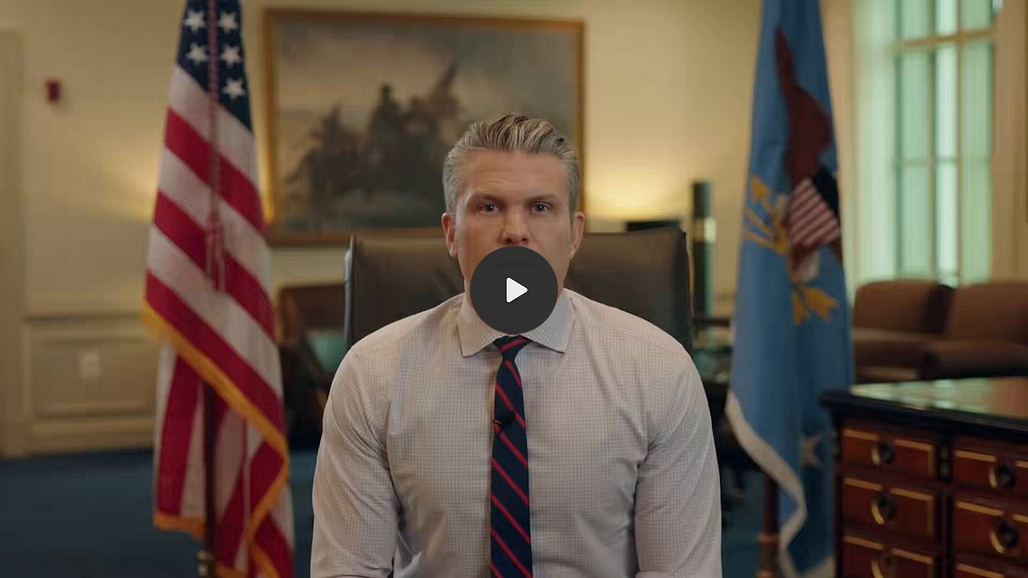
The decision, announced by Defense Secretary Pete Hegseth, represents the most explicit institutional break yet between the American national security establishment and one of the country’s central knowledge institutions.
This is not an isolated administrative adjustment. It is the operationalization of anti-intellectualism as statecraft.
Under the second administration of Donald J. Trump, skepticism toward expertise has moved decisively from posture to practice—from campaign rhetoric to bureaucratic design. Universities are no longer treated as imperfect partners requiring reform, oversight, and engagement. They are increasingly framed as ideological adversaries to be punished, bypassed, or abandoned wholesale.
That shift carries strategic consequences far beyond any single school.
Anti-Intellectualism Is Not Reform
Let us dispense with a common mischaracterization.
This is not about “reviewing programs.”
It is not about asking whether particular courses deliver value.
It is not even primarily about ideological imbalance on campus—real though that issue may be.
Those are questions of governance.
What we are witnessing instead is repudiation: the move from evaluation to disengagement, from discrimination among programs to blanket severance, from corrective pressure to symbolic withdrawal.
Reform strengthens institutions by forcing adaptation.
Anti-intellectualism weakens the state by abandoning its own learning mechanisms.
The Pentagon’s decision to cut all future PME and fellowship ties with Harvard—while allowing current students to finish—underscores the point.
This is not a targeted response to demonstrated failure. It is a prospective cleansing, justified less by performance metrics than by cultural signaling.
Trumpism and the Politics of Knowledge Aversion
Anti-intellectualism has a long pedigree in American life, but what distinguishes its contemporary form is that it has become systematic and strategic.
Under Trumpism, expertise is treated as a rival source of authority.
Scientists, diplomats, intelligence professionals, judges, and educators are routinely framed as members of a hostile elite whose claims must be distrusted not because they are wrong, but because they are expert.
This inversion matters.
When a governing movement treats knowledge production itself as suspect, it ceases to ask whether institutions are correctable and begins to act as though they are irredeemable.
The result is not democratic accountability, but epistemic retreat.
In this worldview, loyalty substitutes for competence, grievance substitutes for analysis, and symbolic confrontation substitutes for institutional learning.
That may mobilize political bases.
It does not generate national power.
The Military Dimension: Why This Is Strategically Unsound
No institution should understand the dangers of anti-intellectualism better than the profession of arms.
Modern military effectiveness depends on:
Strategic foresight
Complex systems thinking
Civil-military legitimacy
Cultural and historical literacy
Technological adaptation
None of these are cultivated through intellectual isolation.
For decades, the U.S. military deliberately sent officers into civilian academic environments—including ideologically uncomfortable ones—precisely because those environments stress-tested assumptions.
Exposure to dissenting ideas was not a liability; it was a feature of professional formation.
The implicit claim behind today’s severance logic—that officers are somehow corrupted by contact with contested intellectual spaces—is not only empirically unsupported. It is institutionally insulting.
A force confident in its professionalism does not fear ideas.
A force that avoids intellectual friction does not become stronger; it becomes brittle.
The Category Error—Where “Balance” Was Always Supposed to Come From
One point is conspicuously absent from much of the “woke university” argument—especially from those now applauding blanket withdrawal as if it were prudent governance.
The “ideological balance” in advanced civil–military education compacts was never designed to come from universities perfectly mirroring the officer corps, or from civilian faculties being evenly distributed across partisan identities. That is not how these programs have ever worked, and it is not what the military services were “buying.”
The balance was always supposed to come from the officers.
The officers who attend these programs are not eighteen-year-olds in search of a first identity. They are mid-career professionals—often fifteen to twenty-five years into service—who have already been formed by institutional responsibility, operational experience, professional military education, and the lived consequences of strategic error.
They arrive not as ideological blank slates but as carriers of a competing epistemic tradition: command accountability, evidence under pressure, and the discipline of consequence.
In other words, the civil–military compact was built on a quiet assumption: that the U.S. armed forces can send mature leaders into intellectually contested environments and trust them to do what professionals do—engage, question, argue, test, and return sharpened. The “ROI” is not merely a credential or a logo. It is the friction itself: exposure to serious critique, access to high-end analytic networks, and the capacity to translate civilian scholarship into operationally meaningful judgment.
Which is why the Pentagon’s action contains a deeper claim than its advocates admit. It is not just a judgment about Harvard’s culture. It is an institutional assertion that we cannot trust our own officers to enter a seminar room and remain professionally intact; that exposure equals contamination; that the state must pre-filter the ideas to which its leaders are exposed.
That is not anti-wokeness. It is identity politics applied to national security—a politics of suspicion that treats intellectual engagement as an allegiance test and substitutes cultural signaling for professional confidence.
If this logic is allowed to stand, it will not stop at Harvard. It will metastasize into a broader posture: fewer civilian fellowships, narrower academic engagement, and ultimately an argument that graduate education itself is “bad ROI” because it produces discomfort. The end-state is not a more lethal or more capable force. It is a more inward-looking and more brittle one—precisely the kind of organization that begins losing its best people not because they disagree, but because they no longer recognize leadership judgment as serious.
From Evaluation to Withdrawal: A Strategic Category Error
There is a legitimate debate to be had about whether universities—Harvard included—have drifted ideologically, whether academic cultures reflect the broader society, and whether particular programs deliver sufficient value for public investment.
Those debates require granularity.
What they do not justify is blanket disengagement.
When the state withdraws wholesale from major knowledge centers, it does not discipline those institutions. It disciplines itself. It narrows talent pipelines, reduces epistemic diversity, and forfeits early access to emerging ideas in technology, governance, and strategy.
Worse still, it converts policy into performance. The action becomes a signal rather than a solution—an assertion of cultural dominance rather than a calibration of institutional value.
That is not strategy.
It is theater with downstream costs.
Anti-Intellectualism and Democratic Decay
The damage is not confined to national security.
Democratic self-government depends on the capacity to distinguish evidence from assertion, to revise beliefs under new information, and to tolerate disagreement without delegitimization.
When universities and knowledge institutions are portrayed as inherently untrustworthy, those civic capacities atrophy.
Public discourse collapses into tribal affirmation. Power becomes personal rather than procedural. The boundary between skepticism and cynicism dissolves.
History offers a consistent lesson: republics do not fail because they argue too much; they fail because they stop learning.
The Deeper Irony
There is one final irony worth confronting.
Modern anti-intellectualism is not a grassroots revolt against elites. It is an elite project in its own right—curated, amplified, and weaponized by political entrepreneurs who benefit from weakening independent sources of knowledge.
Discrediting universities does not empower “the people.”
It removes competitors in the marketplace of authority.
What replaces them is not popular wisdom, but epistemic capture—where truth is defined by loyalty and dissent is treated as disloyalty.
Conclusion: A Republic That Retreats from Thinking Retreats from Power
Universities should be challenged.
Ideological conformity should be resisted.
Academic complacency should be confronted.
But anti-intellectualism is not courage.
It is a strategic retreat from the very capacities that made American power adaptive rather than rigid, innovative rather than stagnant, legitimate rather than coercive.
A serious republic does not abandon its thinkers.
It argues with them.
It pressures them.
It reforms them.
And in doing so, it preserves the ability to learn faster than the challenges it faces.
That—more than any culture war victory—is what national strength requires.
If you value this work, here are three ways you can step into the story with us:
📰 Subscriber (Free)
Stay informed. Receive every new essay, briefing, and analysis straight to your inbox. Join a growing community committed to civic resilience and national security.
🎧 Supporter (Paid Pledge)
Strengthen the signal. Your support sustains both Compound Security, Unlocked and our companion podcast The Civic Brief. Supporters ensure these conversations remain accessible to the wider public while elevating the quality, depth, and reach of the work.
🛡️ Sustainer (Patron Level)
Invest in the mission. Sustainers fuel new research, convenings, and storytelling that enlarge the civic frame of security. This is more than content — it’s a civic project. Your sponsorship helps preserve an independent voice committed to equipping citizens, leaders, and institutions for the compound challenges ahead.
Dead on Ike. KegsBreath @secdef has no idea what the strength and power of our Nation is.
Tremendous insights, Ike, and having been a beneficiary of such fellowships in my career, I wholeheartedly agree with many points, but this in particular; as the outcome gained through these engagements and interactions "engage, question, argue, test, and return sharpened."