

By Dr. Isaiah (Ike) Wilson III
April 2025
An Author’s Note:
For over three decades, I have lived and worked at the crossroads of the military profession and the academic vocation—serving, leading, teaching, and reforming across the Joint Professional Military Education (JPME) system and civilian academia, both in the United States and with international partners.
I have seen firsthand the tremendous potential that “true, holistic education”—rooted in intellectual courage and protected by academic freedom—can unleash among the future leaders of the American military.
I have also seen how fragile this ideal is.
What we are witnessing now, with growing frequency and severity, is not merely a political disagreement or an institutional correction. It is a fundamental betrayal of the dual professional codes that have historically bound the military to the Constitution and the Academy to the search for truth.
When self-censorship, preemptive compliance, and "bending the knee" become standard operating procedures, the damage is not merely reputational or temporary. It is existential.
It erodes the very foundations of trust, intellectual honesty, and constitutional loyalty that officer education—and by extension, civil-military relations—depend upon.
This essay is not written out of abstract concern or theoretical speculation. It is born of lived experience.
It is a call to seriousness for those who would rather look away, a warning for those who still believe that technical skill can substitute for ethical judgment, and a reminder that the health of our Republic depends directly on the integrity of those we educate—and how we educate them.
We are fast approaching a point of no return.
Whether we have the collective will and courage to correct course remains an open—and urgent—question.
The Quiet Purge: How Fear and Self-Censorship Are Destroying Higher Education and the Officer Corps
In the name of "protection" and "compliance," America's premier military academies and Joint Professional Military Education (JPME) institutions are committing slow-motion suicide.
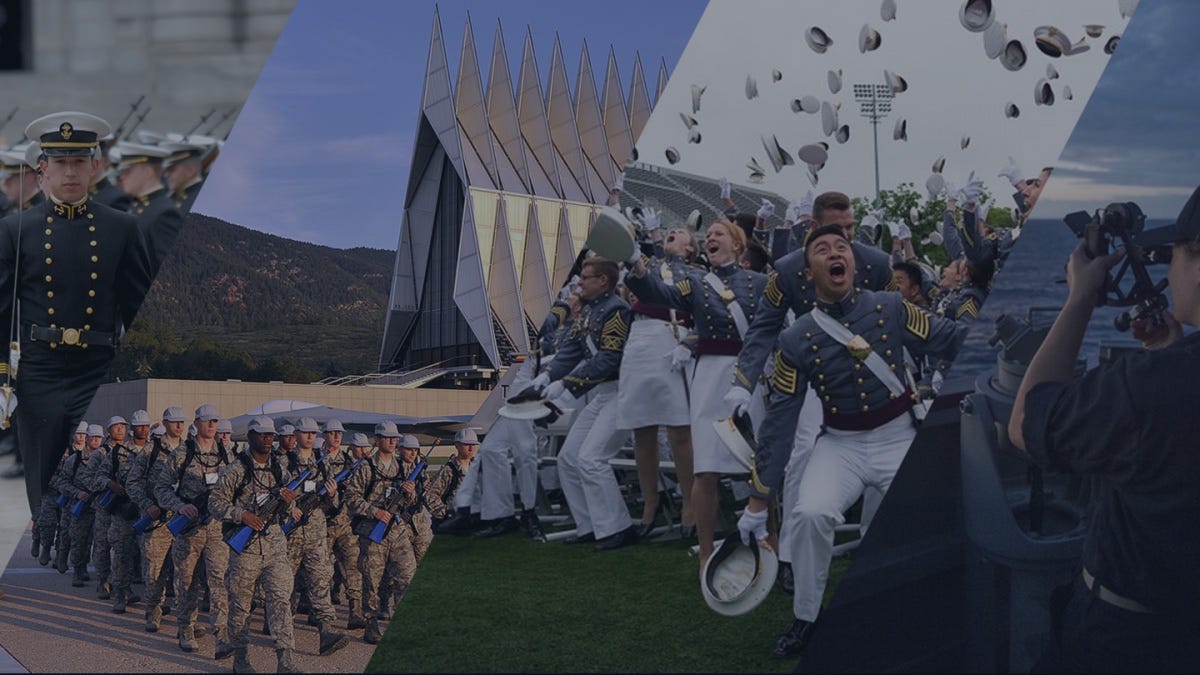
In recent months, under pressure from the Trump administration, undergraduate-level Service Academies, like the U.S. Naval Academy (but not limited to USNA) up through our most senior service college-level War Colleges, have canceled major lectures, banned hundreds of books, edited webpages and faculty bios, and begun scrubbing their public events to ensure political loyalty. Faculty are resigning. Students are losing access to critical ideas.
The deeper tragedy, however, isn't simply external pressure—it’s the widespread, preemptive surrender from within.
Self-censorship. Preemptive compliance. Silence masquerading as survival.
Rather than defending the principles of academic freedom and professional military ethics, administrators at JPME schools are "bending the knee," preemptively aligning their curricula and guest lectures with political demands in the hope of avoiding attention.
It’s a somewhat understandable survival instinct—but a catastrophically short-sighted one.
Dual Betrayals: The Military and the Academy
The crisis is particularly acute in the JPME system because it strikes at two professional identities at once:
The Military Profession demands loyalty to the Constitution, courage under political pressure, and a commitment to truth, even when inconvenient.
The Academic Profession demands the free pursuit of knowledge, protection of dissent, and an ethos of intellectual independence.
Today, both professions are being hollowed out from within.
At Annapolis, lectures on humanitarian law and authoritarianism have been canceled for fear they might anger political appointees. At the U.S. Air Force Academy and West Point, curriculum reviews now vet content for ideological conformity.
Meanwhile, students—many of whom will become commanders with nuclear weapons under their charge—are being taught-by-example that loyalty to political personalities outweighs loyalty to constitutional principle.
Once self-censorship metastasizes, it rarely reverses.
And in a profession where critical thinking, ethical judgment, and the courage to resist unlawful orders, and to speak truth to power pushing back agains ‘awful’ ones, are essential, this decay may soon be fatal.
Education vs. Training: Know the Difference Before It's Too Late
Many misunderstand the stakes because they misunderstand the mission.
Training is about mastering known tasks.
Education is about preparing for the unknown.
Training teaches "how" — how to execute an order, how to fly a plane, how to conduct a raid.
Education teaches "why" — why an order may be illegal, why a strategy may fail, why values must sometimes override expediency.
When Service Academies and JPME programs abandon education in favor of training, they cease to develop leaders. Instead, they manufacture technicians. That might work for authoritarian regimes, but it cannot sustain a republic.
And if military education collapses into ideological indoctrination, what legitimacy will military officers have to command the force—and the lethal power—entrusted to them by the American people?
A Quiet Resistance: The Emerging Lessons of Collective Courage
Amid the Trump administration’s aggressive campaign to subordinate American higher education through executive fiat, a coalition of elite universities has quietly organized what could be a pivotal act of collective resistance.
Comprised of Ivy League and premier research institutions, this "informal collective" is convening behind closed doors to strategize, to share information, and to assert that some red lines—academic freedom, institutional autonomy over hiring and admissions, and independent curriculum design—must remain uncrossed.
This effort is not merely defensive. It embodies a critical, if imperfect, demonstration of principled resistance—a refusal to quietly submit to coercion, and a recognition that institutions, no less than individuals, must act to preserve the fundamental ethics of their calling.
These universities are ‘better late than never’ understanding that yielding under pressure today could irreparably degrade the Academy's independence tomorrow.
To be sure, there are risks: the possibility that "cosmetic concessions" may be mistaken for substantive compliance; the danger that behind-the-scenes maneuvers might further erode public trust already strained by perceptions of elitism and opacity.
Yet these should not obscure the deeper meaning of what is unfolding.
For once, America's leading academic institutions are not competing for favor or survival in isolation; they are engaging in what we might call strategic solidarity—an essential precondition for effective defense against authoritarian encroachments.
This stands in stark contrast to the near-total absence of collective action across the U.S. military’s Joint Professional Military Education (JPME) enterprise.
Faced with similar external pressures and internal fears of reprisal, JPME institutions largely bent the knee—silently, individually, and often preemptively.
Had there been even a fraction of the collective moral courage now stirring among these civilian universities, JPME might have defended both its academic credibility and its professional military ethic.
And it still could.
The principle is clear: resistance, when rooted in fidelity to higher purpose—not mere partisan opposition—can be both principled and strategic.
What these universities are attempting, in their own way, echoes what I have elsewhere termed "principled resistance": action grounded not in obstinance for its own sake, but in the defense of core values against unlawful or unethical demands.
The Academy—and indeed any institution entrusted with the education of future leaders—owes allegiance first and foremost to the truth, and to the intellectual freedom necessary for its pursuit.
If JPME wishes to reclaim its place as a legitimate educational enterprise rather than merely a training institution, it must learn from the example now quietly set by its civilian counterparts: that survival at the cost of integrity is no survival at all.
The Hard Question: Should JPM”E” Institutions Even Exist?
Given the scale of institutional capture, it's time to ask an uncomfortable but necessary question: Are Service Academies and JPME institutions still capable of fulfilling a true educational mission?
Or should we abandon the idea that military-controlled institutions can ever guarantee academic freedom under political pressure?
“A dependence on the people is, no doubt, the primary control on their government, but experience has taught mankind the necessity of auxiliary precautions.”
—James Madison, The Federalist Papers, No.51
As an additional “auxiliary precaution,” …. perhaps we must now limit JPME schools to training only—military skills, operational doctrine—and restore officer education entirely to civilian universities, where constitutional protections and peer accountability for academic freedom still stand a fighting chance.
It would be a radical move. But continuing the current charade is worse. It trains a generation of military leaders to expect compliance, to see dissent as treason, and to regard critical thinking as a threat.
That is not just a threat to the military profession.
It is a threat to the republic itself.
“Click the Pic!”

This is beyond tiresome. I'm a 1985 grad of the Air Force Academy. The service academies have ALWAYS been social engineering laboratories. They have always bowed to political influence. As a grad, I'm thankful they are returning to--or are at least giving lip service to --merit-based admission and progression.