
"After Taiwan"
"WHAT IF" ... this Central Flashpoint Disappeared? Would Great-Power War Between America and China Become Less Likely — or More Dangerous?

“The supreme art of war is to subdue the enemy without fighting.”
— The Art of War
“The strong do what they can and the weak suffer what they must.”
— History of the Peloponnesian War
For the better part of two decades, strategists, policymakers, war gamers, and intelligence analysts have treated Taiwan as the definitive flashpoint of twenty-first century great-power competition.
The island sits at the center of military planning scenarios, naval modernization efforts, semiconductor dependency fears, alliance architecture debates, and increasingly apocalyptic forecasts about the future of the international order.
In Washington, Taiwan is often framed as the hinge upon which democracy’s future in Asia rests. In Beijing, it is presented as the unfinished business of national reunification and the closing chapter of China’s “Century of Humiliation.”
And yet, during a recent graduate seminar discussion on U.S.–China competition, a more provocative question emerged: what if Taiwan somehow disappeared from the strategic equation altogether?
Not physically, of course. But politically.
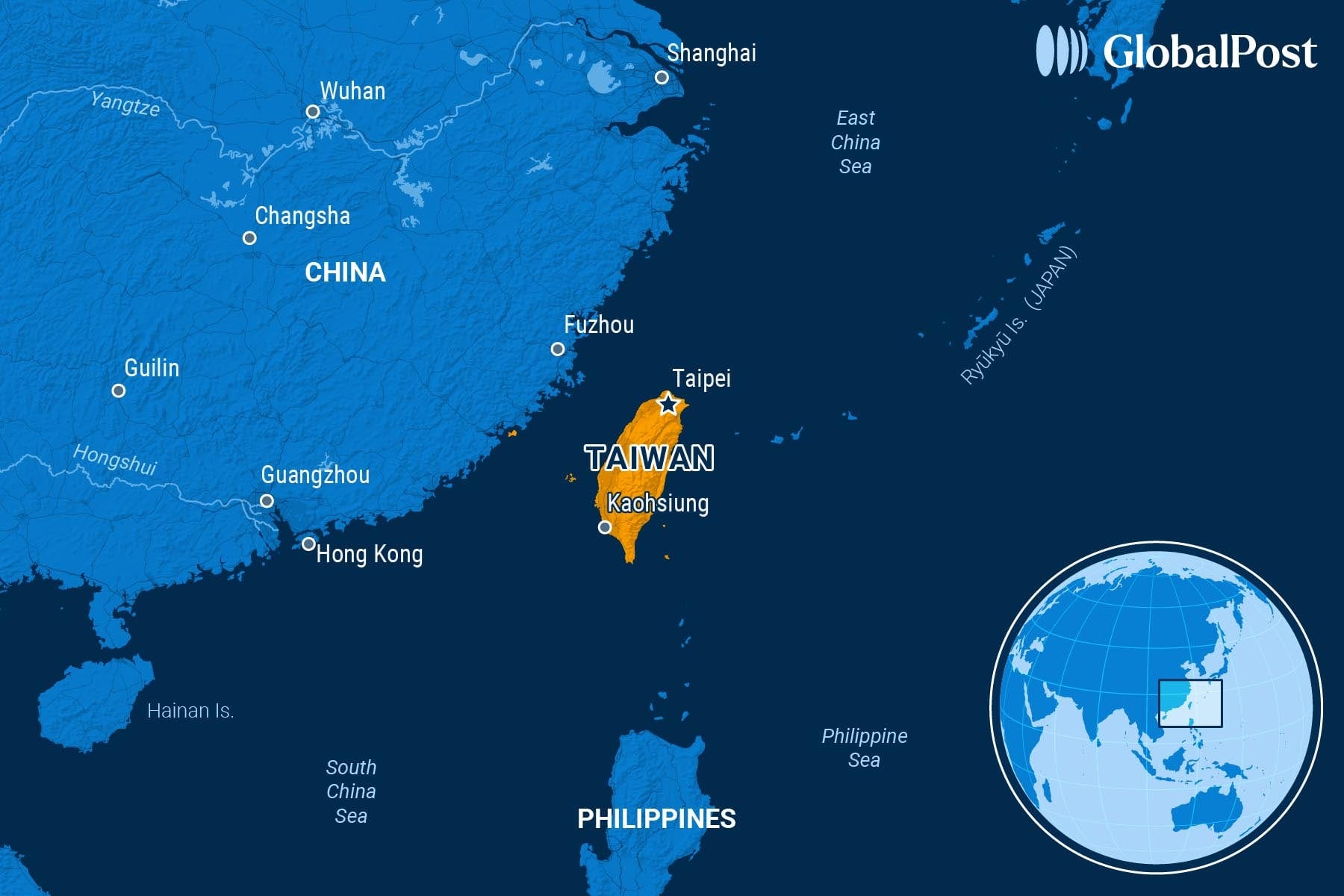
“What if” … Beijing indefinitely deferred reunification ambitions? “What if “ … Taipei accepted some form of durable ambiguity? “What if” … Washington and Beijing struck a grand bargain reducing Taiwan’s salience? Or more radically still, “what if” … all parties mutually recognized that war over Taiwan would be catastrophically irrational?
Would the risk of great-power war substantially decline?
Or would another fault line simply emerge to take Taiwan’s place?
The uncomfortable answer is that Taiwan is not merely a territorial dispute. It is the most visible manifestation of a much deeper systemic collision between two incompatible visions of order, legitimacy, modernity, and power.
Remove Taiwan from the equation, and the underlying compound security dilemma between the United States and China would remain intact. Indeed, eliminating the most obvious flashpoint might actually make the rivalry more diffuse, less predictable, and potentially more dangerous.
Taiwan is not the disease. It is the symptom.
The False Hope of Transactional Stability
The proposition raised by the students—that economic incentives might persuade Beijing to indefinitely moderate its ambitions toward Taiwan—reflects a deeply American/ ‘Western’ strategic instinct. It assumes states behave primarily as “western-cultural rationality” utility maximizers pursuing absolute gains. If sufficient economic benefits can be arranged, conflict can be avoided. Markets become stabilizers. Interdependence becomes restraint.
This logic animated much of post–Cold War American grand strategy toward China itself.
The underlying wager was simple: prosperity would socialize Beijing into the liberal international order. Wealth would incentivize moderation. Trade would reduce the appeal of coercion. Globalization would tame geopolitics.
Instead, China became simultaneously more prosperous, more technologically capable, more nationalistic, and more revisionist.
This does not mean Chinese leaders are irrational. Quite the opposite. Beijing’s actions are often internally rational within the logic of Chinese national and strategic culture, Communist Party survival, historical memory, and civilizational restoration. But that rationality does not necessarily map onto American assumptions about what constitutes acceptable compromise.
For many American strategists, Taiwan is principally strategic: geography, semiconductors, sea lanes, credibility, alliance assurance.
For many in Beijing, Taiwan is existentially civilizational.
The distinction matters enormously.
From the perspective of Xi Jinping and the contemporary CCP, Taiwan is bound up with regime legitimacy, historical destiny, nationalism, and the psychological closure of the post-imperial Chinese experience. The issue touches not merely policy preferences but identity itself. And identity conflicts are notoriously resistant to transactional bargaining.
This is where many Western analyses fail. They interpret Beijing primarily through materialist lenses while underestimating the power of historical trauma, humiliation narratives, symbolic sovereignty, and personal-political legitimacy.
No amount of soybean purchases, tariff reductions, or investment packages can fully compensate for what Beijing perceives as unfinished national reunification.
Likewise, no amount of Chinese economic cooperation can erase American fears that a successful forcible annexation of Taiwan would fundamentally reorder the Indo-Pacific balance of power and signal the eclipse of American primacy.
Thus the rivalry persists because both sides perceive the issue not merely as negotiable interest, but as legitimacy itself.
Taiwan as Proxy for the Real Conflict?
This is why imagining a world “after Taiwan” is analytically useful.
Once Taiwan is hypothetically removed, one can more clearly see the deeper structure of the rivalry beneath it.
The true competition is not over a single island. It is over whose model of order defines the future international system.
The United States—despite its mounting internal contradictions—still broadly operates within a liberal-maritime conception of world order: open sea lanes, alliance systems, distributed power centers, market integration, institutional legitimacy, and a rules-based system in which sovereignty is theoretically protected by international norms.
China increasingly advances a neo-civilizational and sphere-of-influence conception of order: hierarchy over universality, regional primacy over global openness, sovereignty as inviolable when applied to itself but flexible when useful elsewhere, and legitimacy rooted less in liberal norms than in performance, stability, nationalism, and historical restoration.
These systems can coexist during periods of equilibrium. But during periods of transition, they generate what might be termed a compound security dilemma: each side’s defensive actions are interpreted by the other as offensive preparations.
American alliances appear to Beijing as encirclement.
Chinese military modernization appears to Washington as expansionism.
American technology restrictions appear to Beijing as containment.
Chinese industrial policy appears to Washington as economic warfare.
Neither side fully trusts the other’s declared intentions because each increasingly doubts the legitimacy of the other’s system itself.
Taiwan merely concentrates these tensions into a single highly combustible theater.
If Not Taiwan, Then What?
If Taiwan somehow ceased to be the principal trigger point, at least five other potential flashpoints would likely intensify.
The South China Sea
The most immediate substitute flashpoint would likely be the South China Sea.
Unlike Taiwan, which Beijing regards as internal, the South China Sea directly implicates competing sovereignty claims, maritime law, resource access, military positioning, and freedom of navigation operations. It is where China’s regional ambitions collide most directly with America’s maritime order.
The danger here is not necessarily deliberate invasion, but escalation through cumulative coercion: ship collisions, maritime militia confrontations, air intercepts, blockade-like activities, or accidental loss of life.
Unlike Taiwan, where red lines are relatively clear, the South China Sea is strategically gray. Gray zones are often where wars begin.
The Philippines and Alliance Credibility
A second flashpoint would emerge through treaty obligations involving the Philippines.
The renewed American military presence there, combined with Manila’s growing assertiveness regarding contested waters, creates a scenario in which relatively minor incidents could rapidly implicate alliance commitments. A clash between Chinese coast guard forces and Philippine vessels could force Washington into a credibility crisis not unlike NATO tripwire dilemmas during the Cold War.
This is especially dangerous under administrations that emphasize performative toughness and nationalist signaling.
Technology and Economic Warfare
The next great battlefield may not initially be military at all.
Semiconductors, AI architectures, rare earth supply chains, quantum computing, biotechnology, and digital infrastructure increasingly constitute the strategic terrain of modern power. The competition between the United States and China is already evolving into a struggle over technological ecosystem dominance.
This introduces an underappreciated danger: economic decoupling can reduce stabilizing interdependence faster than military planners adjust to the consequences.
In earlier eras, commercial integration often restrained escalation because elites shared economic interests. But as Washington and Beijing increasingly securitize trade, investment, data, and research ecosystems, the buffers against confrontation weaken.
Cold wars are manageable. Cold wars without stabilizing economic interdependence are harder.
Space and Orbital Infrastructure
Another emerging flashpoint lies above Earth entirely.
American and Chinese societies are deeply dependent on vulnerable orbital systems for communications, logistics, navigation, banking, military operations, and economic coordination. Anti-satellite weapons, cyber disruptions, and space-based infrastructure attacks offer asymmetric means to blind or paralyze an opponent without immediately crossing the nuclear threshold.
This creates incentives for preemption during crises.
The first shots of a future U.S.–China conflict may not occur in Taiwan or the South China Sea. They may occur silently in orbit.
Internal Legitimacy Crises
Most dangerously, the ultimate flashpoint may not originate externally at all.
Both systems face mounting internal legitimacy pressures.
China confronts slowing growth, demographic decline, debt burdens, youth unemployment, and the risks inherent in highly centralized personalistic rule.
The United States faces polarization, institutional distrust, democratic erosion fears, fiscal instability, and increasing fragmentation of national identity.
Historically, regimes under internal strain often externalize tensions outward.
The greatest danger may therefore emerge not from confident powers, but insecure ones.
The Personalization Problem
The students were also correct to raise the role of leadership psychology.
Great-power competition is never purely structural. Personalities matter. Ego matters. Historical self-conception matters.
Donald Trump approaches international politics transactionally, theatrically, and through personalized dominance frameworks. Alliances become protection rackets. Trade becomes leverage theater. Prestige and humiliation become deeply intertwined with policy itself.
Xi approaches politics through a Leninist-civilizational framework emphasizing restoration, discipline, historical destiny, and centralized authority.
Both leaders share a distrust of liberal proceduralism. Both prize strength symbolism. Both operate within highly personalized political ecosystems that reward nationalist signaling and punish perceived weakness.
This creates volatility.
The danger is not merely ideological incompatibility. It is that both systems increasingly rely on performative demonstrations of resolve to sustain domestic legitimacy.
Under such conditions, compromise itself becomes politically hazardous.
The More Frightening Possibility
The most unsettling conclusion is that Taiwan may actually function as a stabilizer precisely because everyone recognizes its dangers.
Clear flashpoints can create caution.
Ambiguous competitions can create drift.
During the Cold War, Berlin was dangerous precisely because it mattered so much. Yet that clarity also imposed discipline. Both Washington and Moscow understood the stakes.
If Taiwan were somehow removed from the equation, the rivalry would not disappear. It would metastasize across economic systems, cyberspace, maritime zones, technological standards, orbital infrastructure, and competing legitimacy narratives.
The competition would become less geographically concentrated and more systemically diffuse.
Harder to deter.
Harder to define.
Harder to control.
‘Beyond’ the Taiwan Frame
The deeper lesson is that the United States and China are no longer merely competing over territory or influence. They are competing over the organizing logic of the emerging world system itself.
This is why purely transactional solutions remain insufficient.
One cannot permanently bargain away legitimacy anxieties.
One cannot tariff-adjust historical memory.
One cannot sanction away civilizational ambition.
Nor can military deterrence alone resolve the underlying insecurity each side increasingly feels about its own future trajectory.
The challenge before both powers is therefore not simply how to avoid war over Taiwan. It is whether two rival systems can coexist during a prolonged transition in global order without convincing themselves that coexistence itself constitutes defeat.
That—not Taiwan alone—is the true hair-trigger question of our age.
If you value this work, here are three ways you can step into the story with us:
📰 Subscriber (Free)
Stay informed. Receive every new essay, briefing, and analysis straight to your inbox. Join a growing community committed to civic resilience and national security.
🎧 Supporter (Paid Pledge)
Strengthen the signal. Your support sustains both Compound Security, Unlocked and our companion podcast The Civic Brief. Supporters ensure these conversations remain accessible to the wider public while elevating the quality, depth, and reach of the work.
🛡️ Sustainer (Patron Level)
Invest in the mission. Sustainers fuel new research, convenings, and storytelling that enlarge the civic frame of security. This is more than content — it’s a civic project. Your sponsorship helps preserve an independent voice committed to equipping citizens, leaders, and institutions for the compound challenges ahead.